Ishan Ayurvedic Hospital
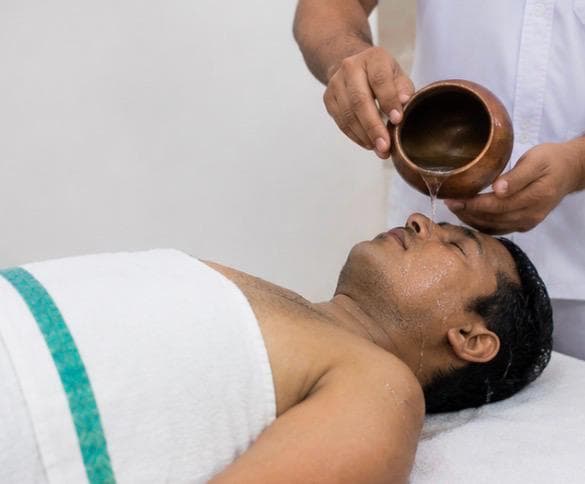
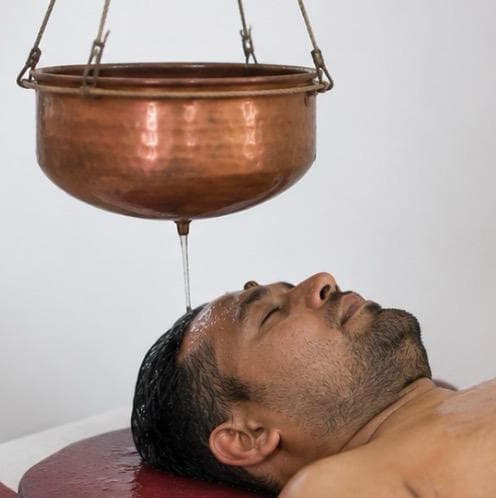
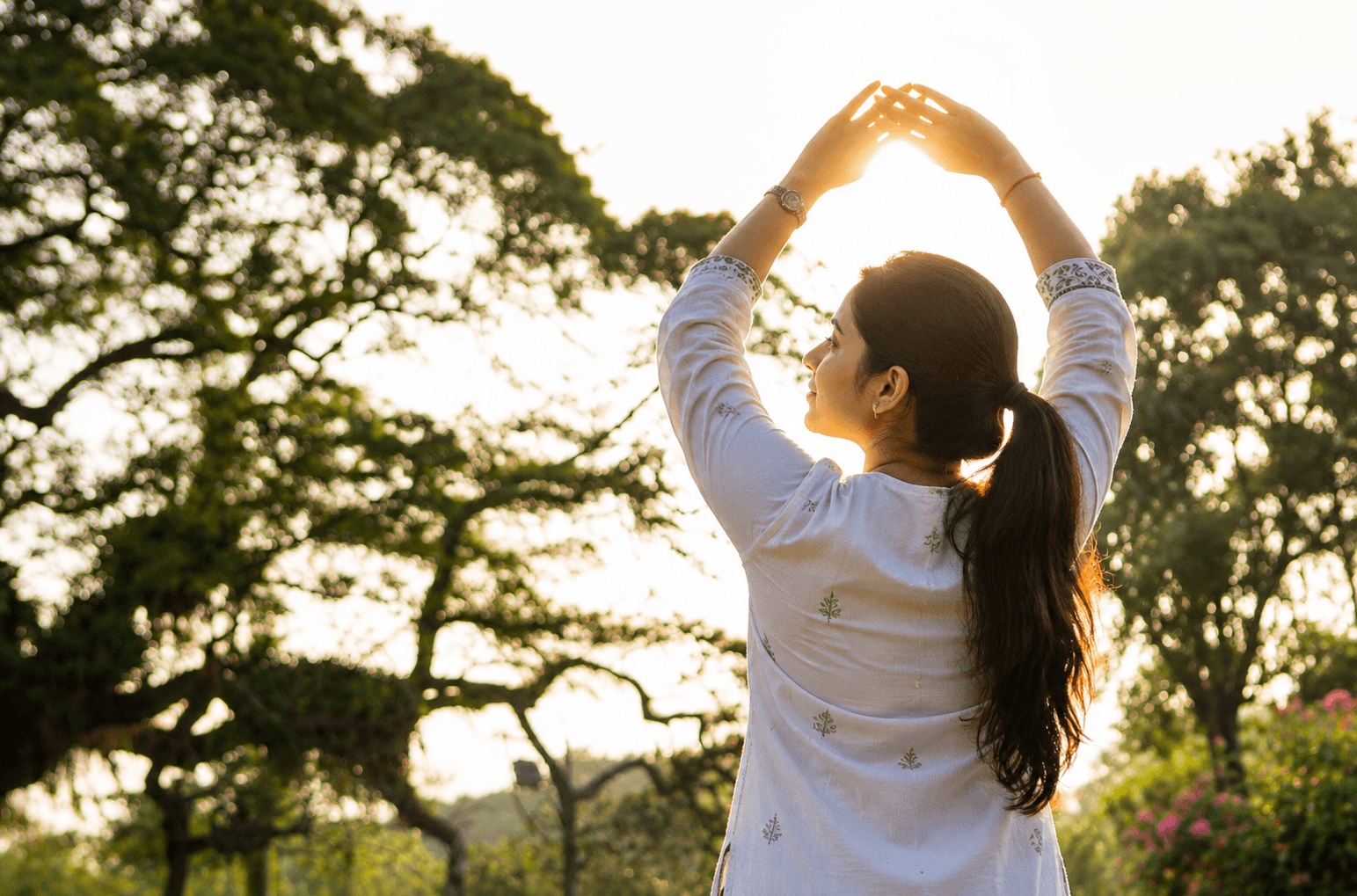
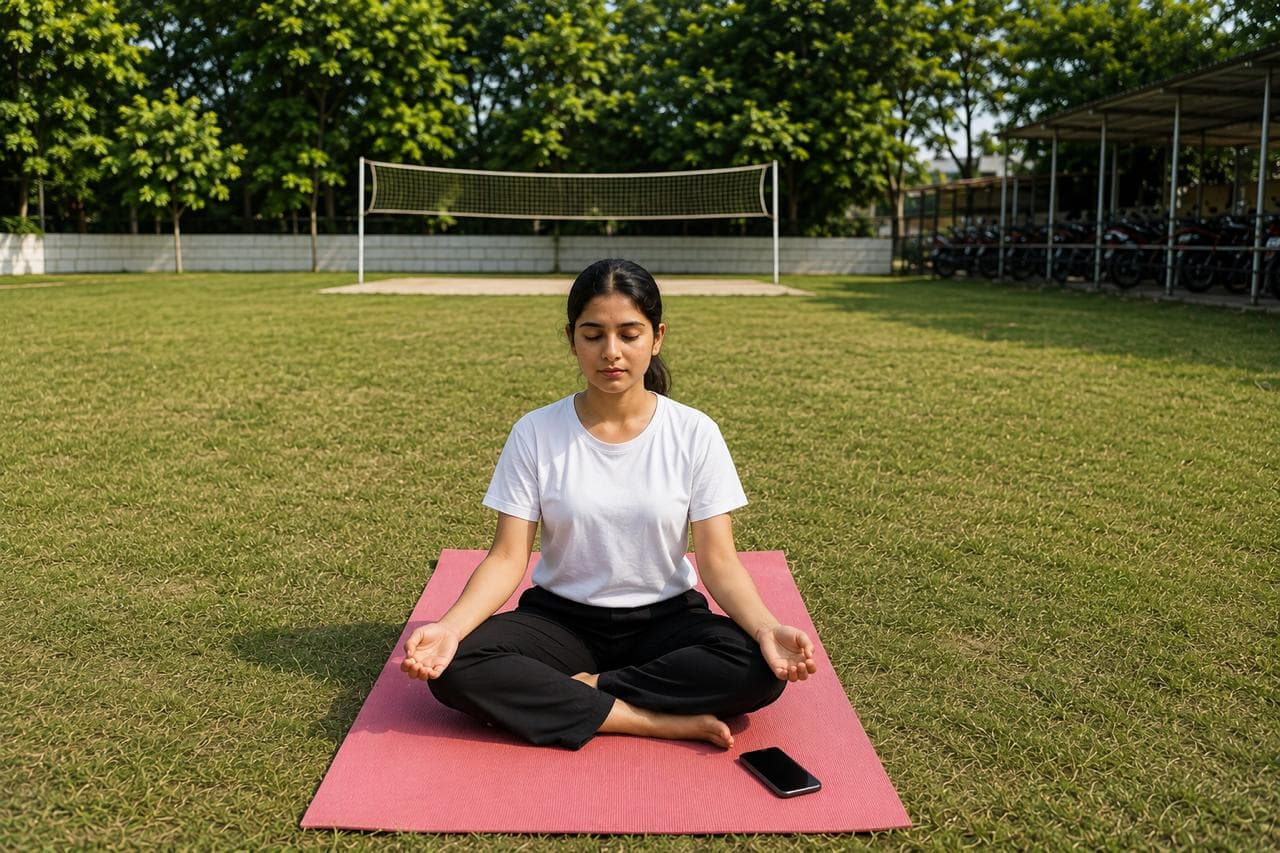
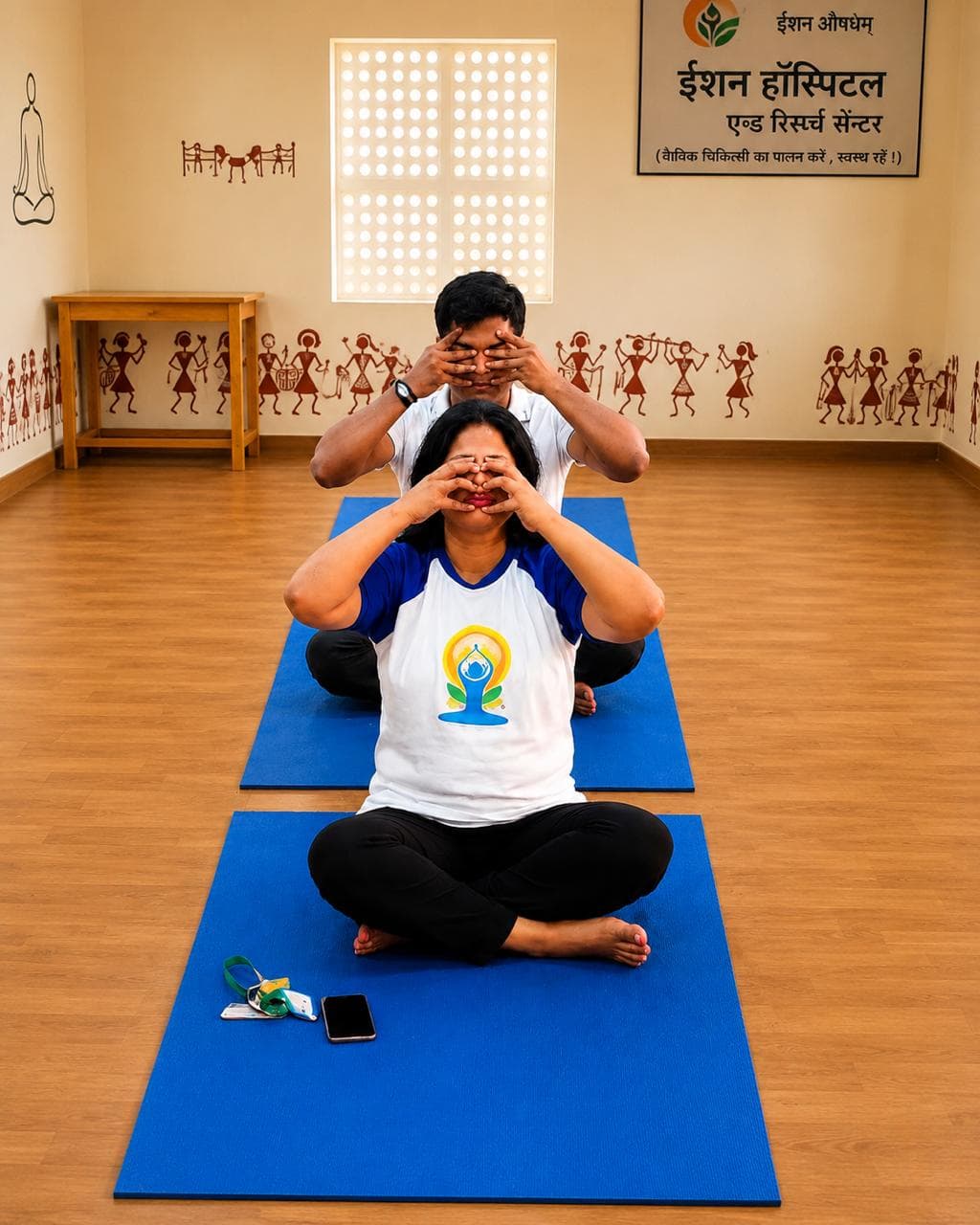
Morning yoga and naturopathy therapy setting at Ishan Ayurvedic Hospital, Greater Noida.
Swasthavritta & Yoga Department

Heal with what is already natural.

Mud, water, sun, pressure, breath and stillness — used with precision, not left to chance. Naturopathy removes what is working against the body. Yoga builds what keeps it well.

  • 10Naturopathy therapies
  • 5Pillars of yoga practice
  • 3Steps in every course
  • 0Drugs or needles in naturopathy
How a naturopathy course is built

Nature does the healing. We only remove the obstacles.

Naturopathy works on one belief: the body already knows how to heal. Every therapy here exists to clear what is standing in its way — nothing more.

  1. Step 1Day 1

    Assessment

    Understanding your constitution

    A physician reviews your history, lifestyle, habits and current health condition before any therapy is planned.

    • History review
    • Physical examination
    • Therapy plan
  2. Step 2Course duration varies

    Elemental Therapy

    Earth, water, sun and touch

    Therapies are selected based on the five elements — mud, water, air, sun and pressure — chosen for your health condition.

    • Mud & water therapy
    • Massage & Acupressure
    • Sun exposure
  3. Step 3Ongoing

    Diet & routine

    What carries the result forward

    A food plan and daily routine are set so the benefit of the therapy continues after you leave.

    • Diet plan
    • Sleep routine
    • Follow-up review
    • Lifestyle guidance
The therapies

Ten therapies and five pillars, in the order they are taught

Every therapy below is prescribed, not picked. Use the index to jump to any one of them.

Naturopathy

Prakritik Chikitsa — nature cure therapies

Ten therapies built from five natural elements — earth, water, air, sun and touch. Each one is prescribed after examination, not offered as a fixed package.

Earth therapy

Mitti Chikitsa

Mud Therapy

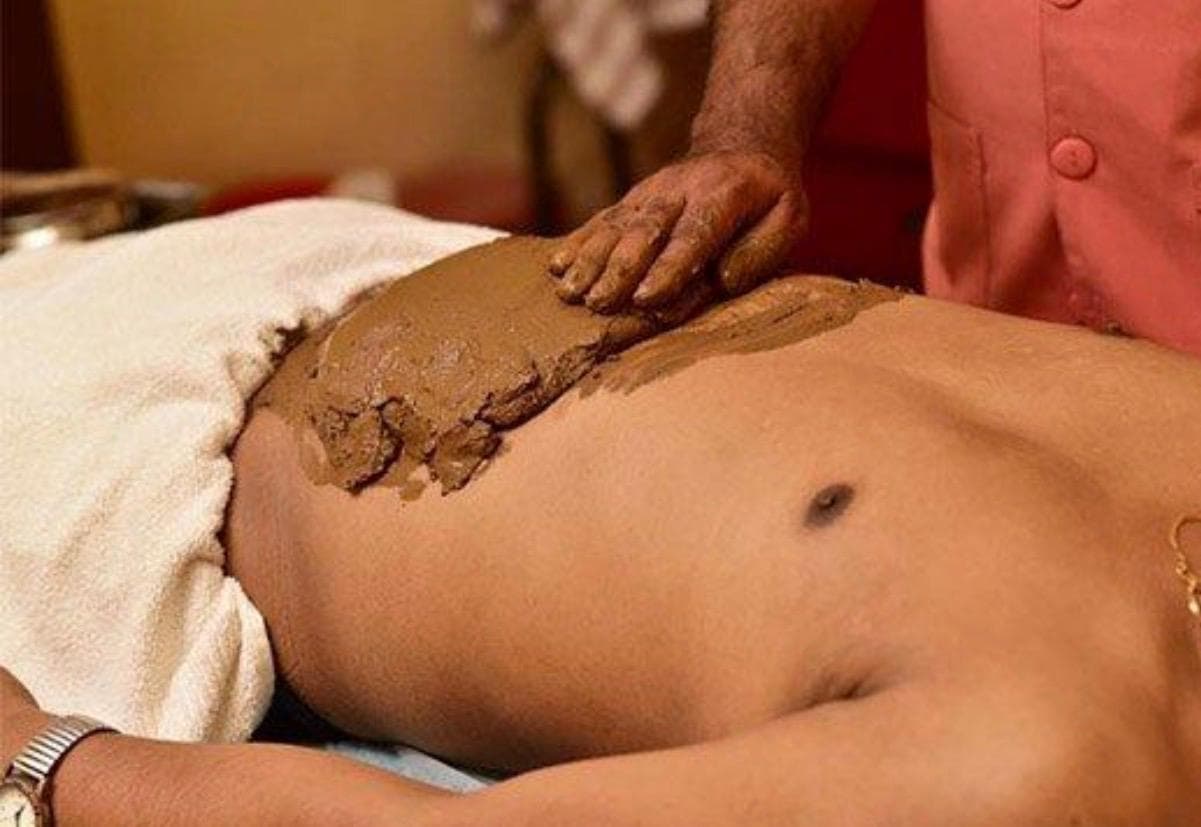
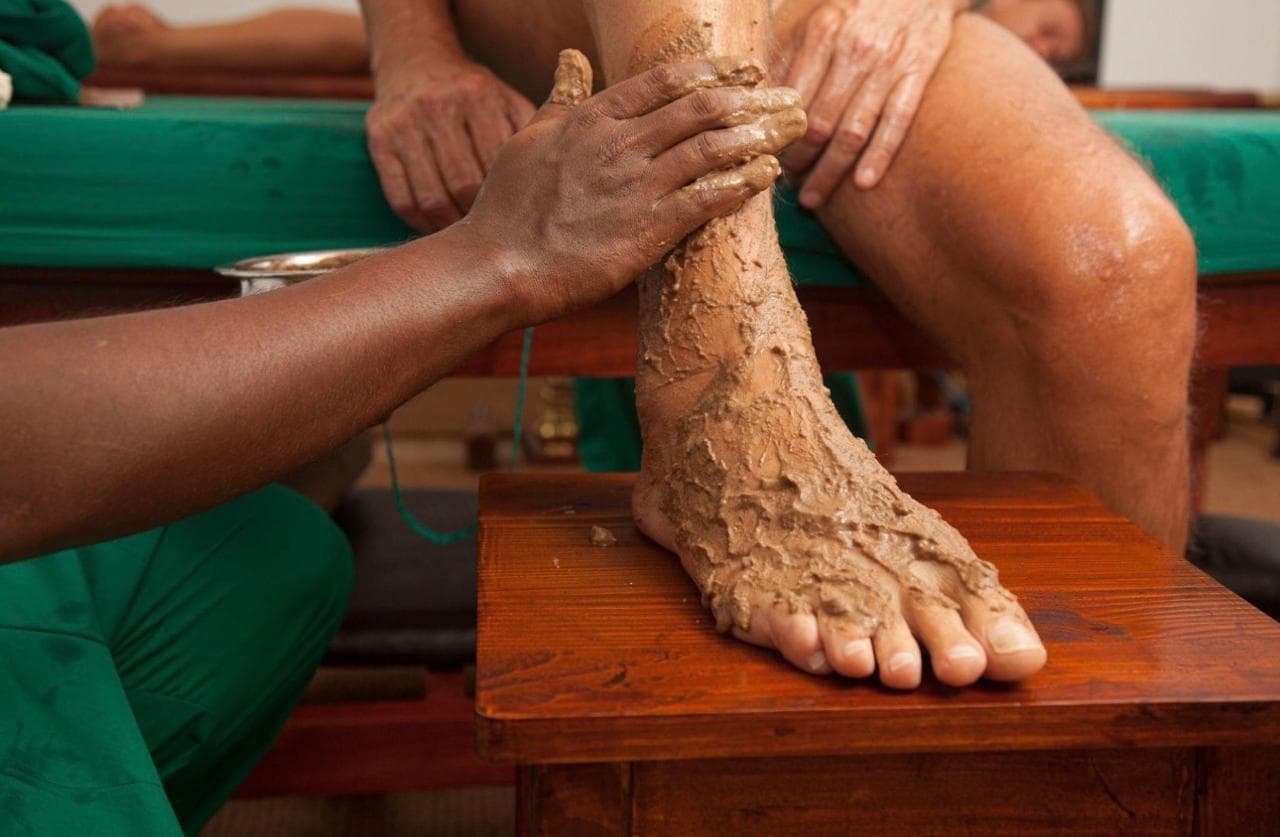
Clean, mineral-rich mud is applied to the abdomen, eyes or full body to draw out heat and toxins.
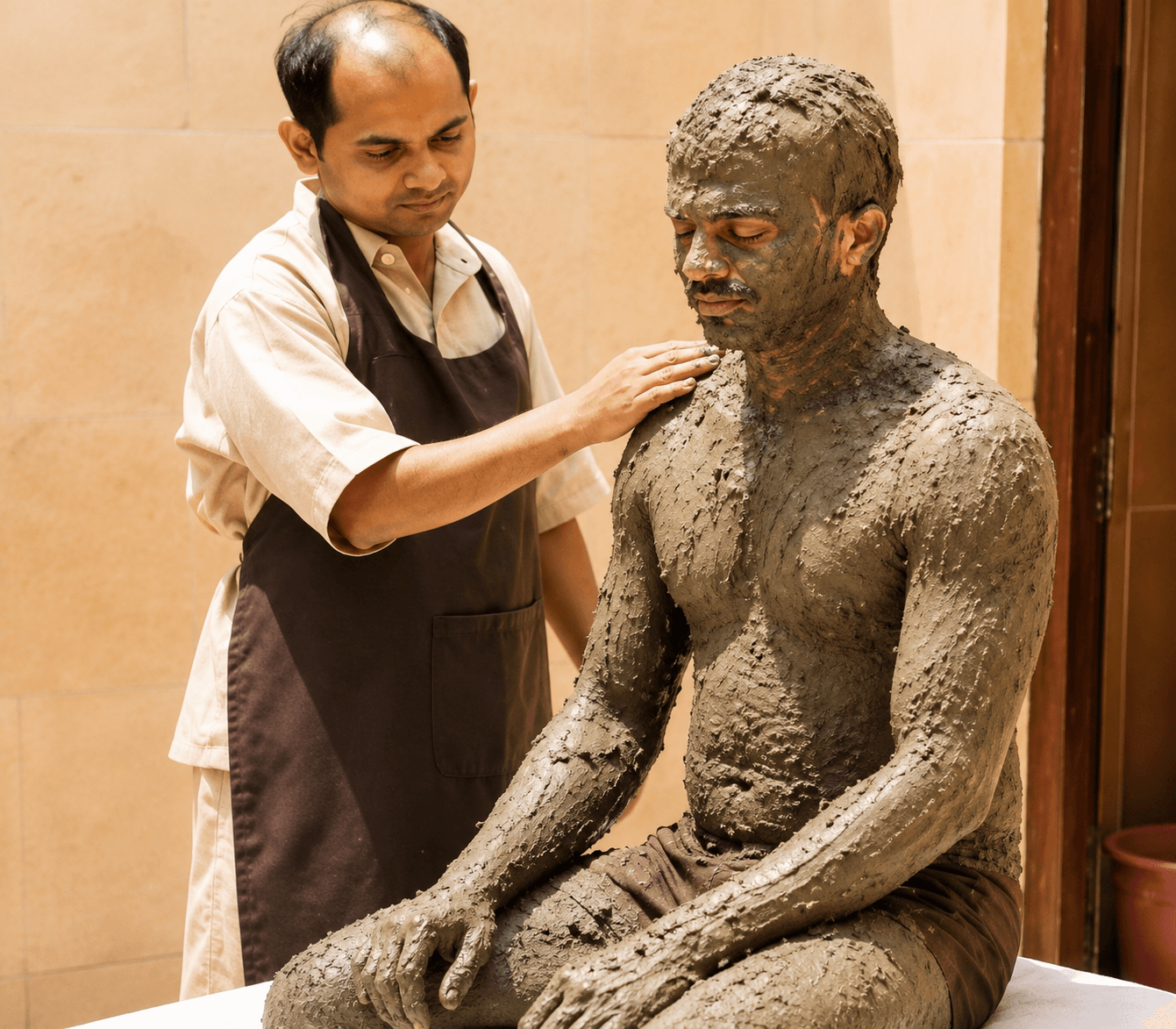
  • Fine therapeutic mud being cleaned and soaked before application.

    Mud prepared and cleaned

  • Abdominal mud pack applied to a patient in the naturopathy wing.

    Abdominal mud pack application

  • Mud eye pack given for eye strain and puffiness.

    Eye pack therapy

What happens
  • Fine river mud or Fuller's earth is cleaned, soaked and applied at room temperature.
  • Used as an abdominal pack, an eye pack, or a full-body wrap depending on the condition.
  • Left in place for 20–30 minutes, then washed off with plain water.
How it helps the body
  • Mud absorbs heat from the skin in the same way a cold compress does, but far more evenly and for a longer duration.
  • Its natural minerals draw excess fluid and waste out through the skin's pores.
  • On the abdomen, the steady coolness calms an overactive gut and eases acidity.
  • Over the eyes, it relaxes the small muscles that get strained by screens and poor sleep.
Duration
20–30 minutes
Course
7–14 days
Feel
Cool, heavy, calming
After
Rinse, rest 15 min
Commonly used for
  • Acidity and indigestion
  • Constipation
  • Eye strain and puffiness
  • Skin inflammation
  • High body heat
  • Insomnia
Water therapy

Jal Chikitsa

Hydrotherapy

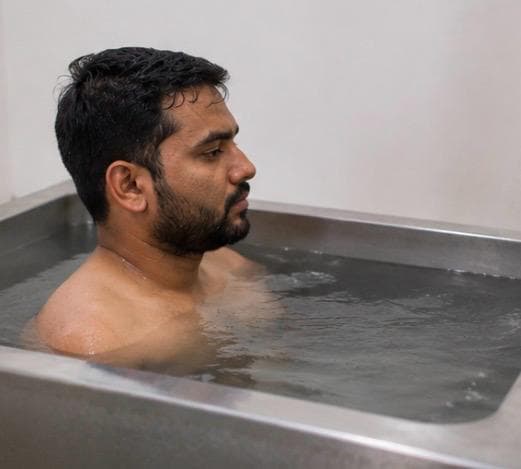
Hot and cold water are used in sequence — baths, sprays and packs — to reset circulation.

  • Hip bath tub prepared for a hydrotherapy session.

    Hip bath tub setup

  • Spinal bath in progress in the hydrotherapy room.

    Spinal bath in progress

  • Steam bath chamber used for hydrotherapy.

    Steam bath chamber

What happens
  • Includes hip baths, spinal baths, steam baths, and hot-cold contrast showers.
  • Water temperature and duration are set for your condition, not applied by default.
  • Hot and cold are often alternated in the same session to create a contrast effect.
How it helps the body
  • Hot water widens blood vessels and pulls blood towards the skin; cold water does the opposite.
  • Alternating the two acts like a pump, pushing blood and lymph through the body faster.
  • A hip bath draws blood away from a congested pelvis or head, easing pain.
  • A spinal bath calms the nerves running along the spine, which lowers overall stress.
Duration
10–20 minutes
Course
7–14 days
Feel
Invigorating, then calm
After
Dry, warm covering
Commonly used for
  • High blood pressure
  • Chronic fatigue
  • Piles and Pelvic congestion
  • Headache and Migraine
  • Poor circulation
  • Stress
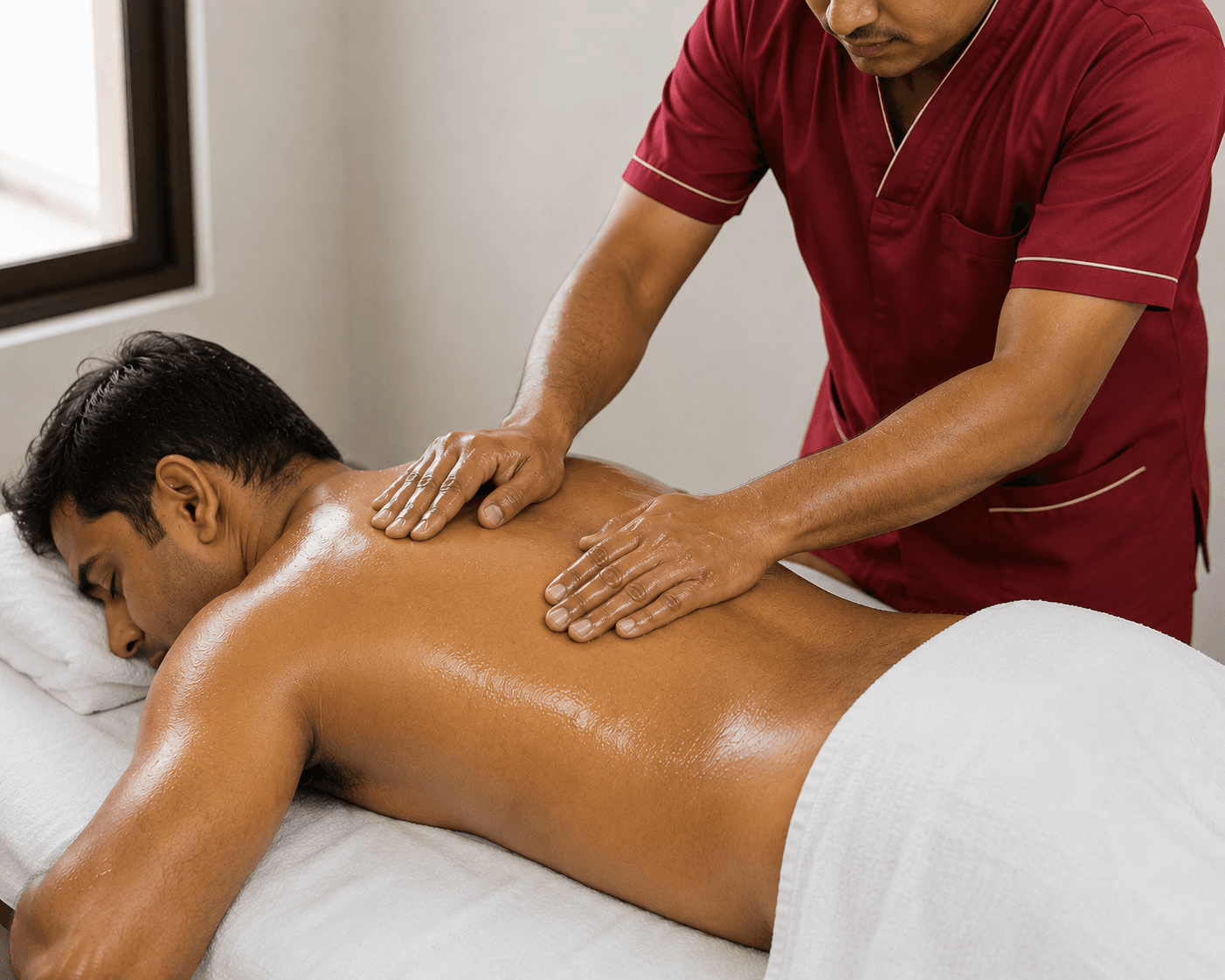
Touch therapy

Prakritik Massage

Naturopathic Massage

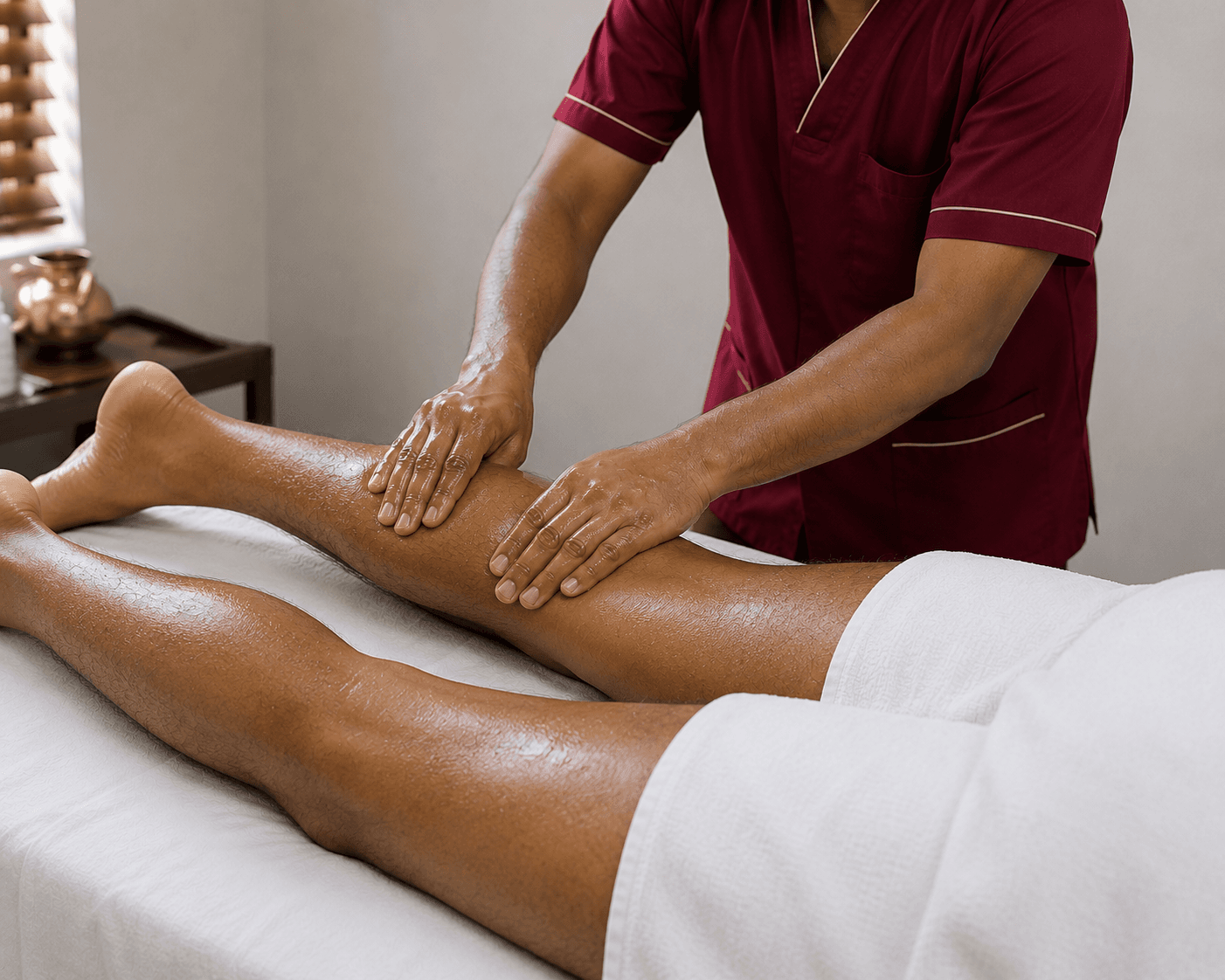
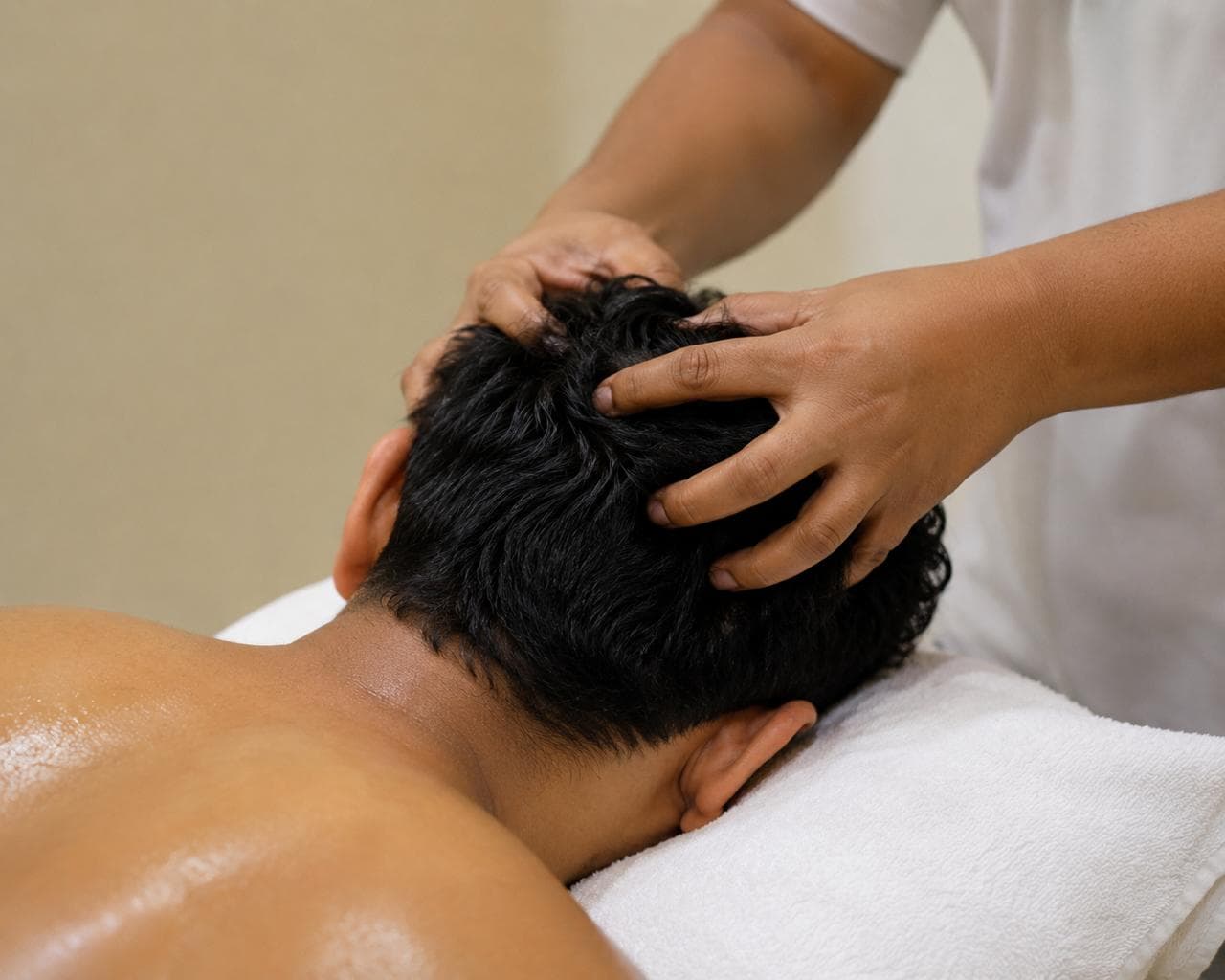
Firm, rhythmic strokes applied along the direction of blood flow — no oil required.

  • Therapist working directional massage strokes along a patient's limb.

    Directional massage strokes

  • Naturopathy massage therapy room set up for a session.

    Therapy room setup

  • Rest area used after a naturopathic massage session.

    Post-massage rest area

What happens
  • Dry or lightly oiled massage using firm strokes that follow the direction of the veins.
  • Focuses on circulation and lymphatic drainage rather than deep muscle release.
  • Often paired with a hydrotherapy session on the same day.
How it helps the body
  • Directed pressure pushes stagnant blood and lymph back towards the heart.
  • Muscle tension built up from poor posture or stress is released gradually.
  • Better circulation means the joints and organs receive more oxygen and clear waste faster.
Duration
30–45 minutes
Course
7–14 days
Feel
Firm, warming, loosening
After
Rest, warm water
Commonly used for
  • Muscle stiffness
  • Poor circulation
  • Fatigue
  • Swelling in the limbs
  • Stress-related tension
  • Post-exercise recovery
Pressure therapy

Acupressure

Pressure Point Therapy

Firm thumb or tool pressure on specific points to relieve pain without needles.

  • Acupressure point charts being referred to during a session.

    Pressure point charts in use

  • Foot acupressure being applied by a therapist.

    Foot pressure therapy

  • Hand acupressure point being pressed and held.

    Hand point application

What happens
  • Steady pressure is applied to defined points on the hands, feet, ears, or body.
  • Each point is pressed and held for 30–60 seconds, then released.
  • No needles or instruments pierce the skin at any point.
How it helps the body
  • Pressure on a specific point sends a strong nerve signal that can override a pain signal from elsewhere in the body.
  • It improves local blood flow to organs connected to that point.
  • Regular pressure at the right points reduces tension held in the body from repeated stress.
Duration
20–30 minutes
Course
7–10 sessions
Feel
Firm pressure, then relief
After
Drink warm water
Commonly used for
  • Headache and migraine
  • Nausea
  • Joint pain
  • Menstrual cramps
  • Anxiety
  • Sinus congestion
Needle therapy

Acupuncture

Fine Needle Therapy

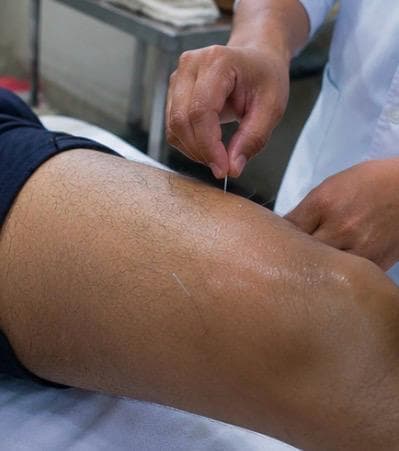
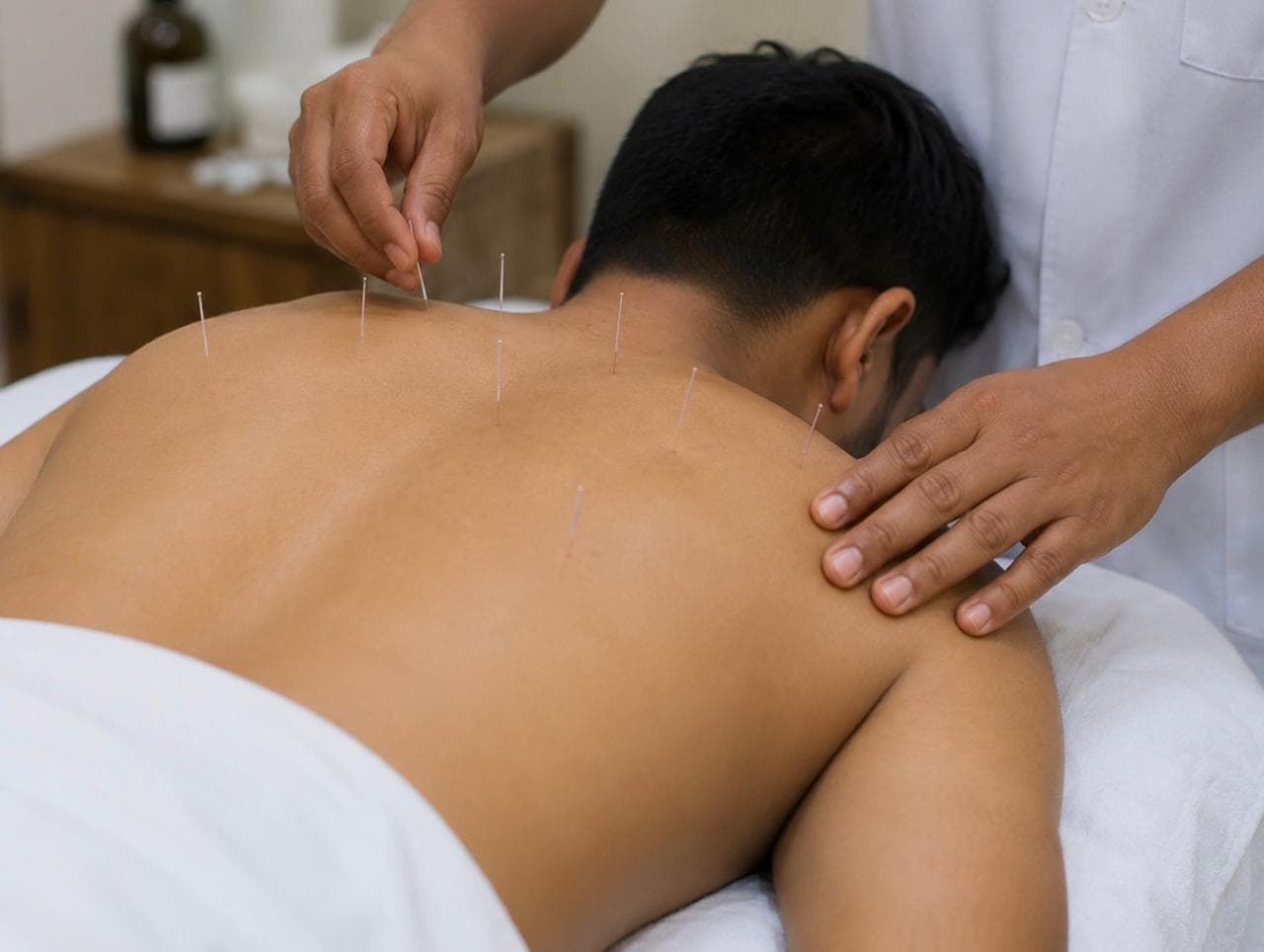
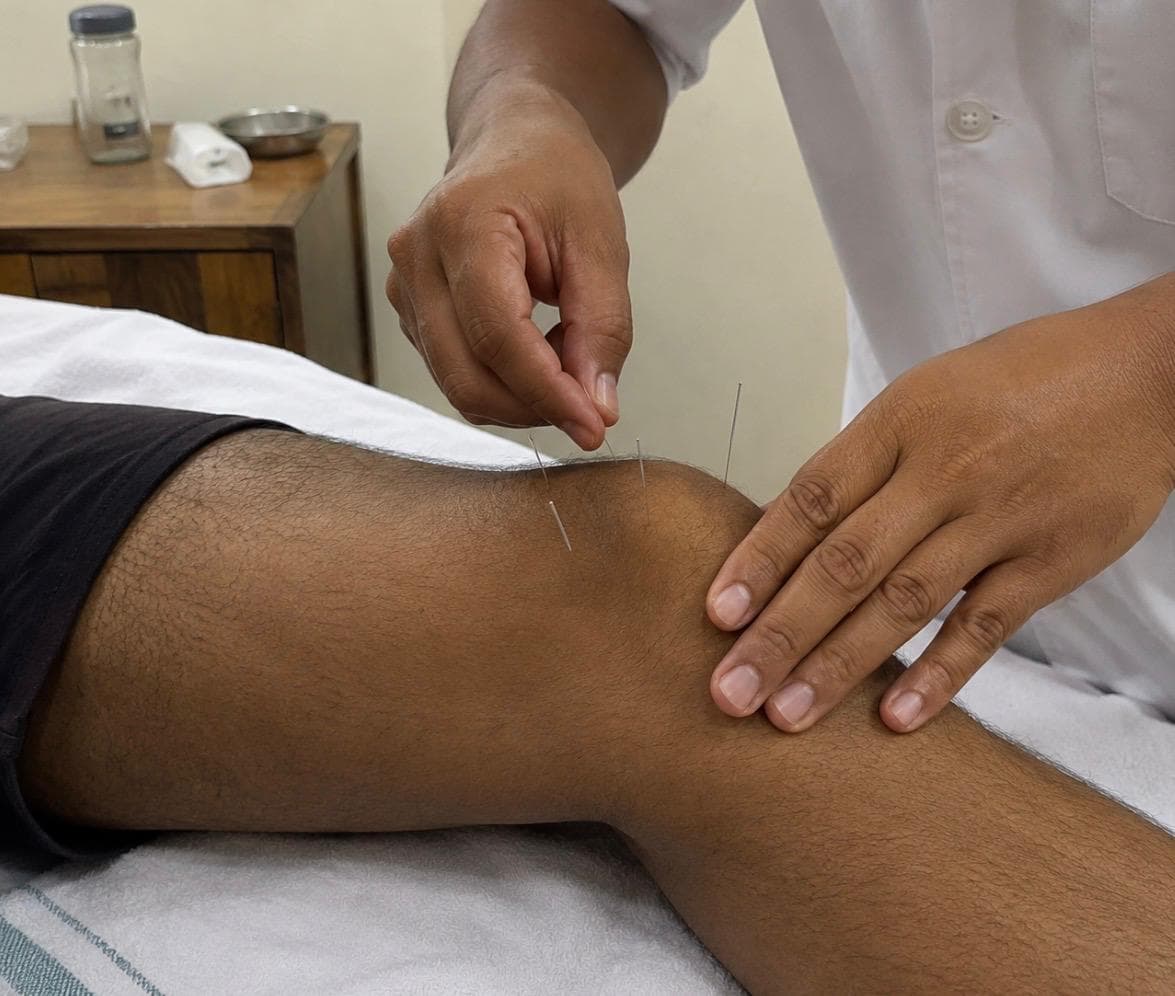
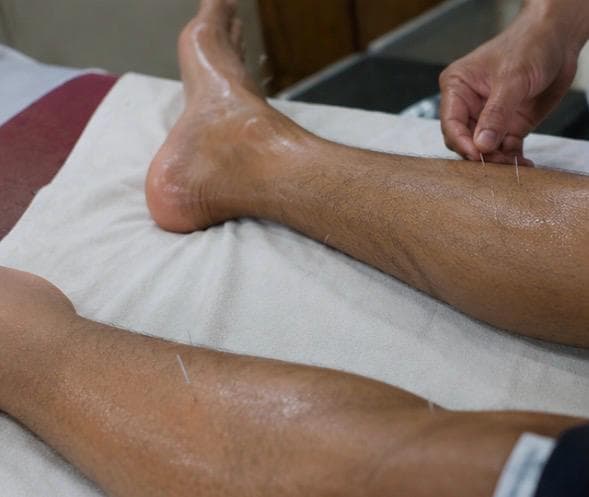
Hair-thin, sterile needles are placed at precise points to relieve pain and restore balance.

  • Sterile single-use acupuncture needles laid out before a session.

    Sterile single-use needles

  • Acupuncture points being placed along a patient's back.

    Point placement on the back

  • Patient resting quietly while needles are retained.

    Quiet rest during treatment

What happens
  • Sterile, single-use needles, thinner than a strand of hair, are placed at selected points.
  • They are left in place for 15–30 minutes while you rest quietly.
  • Most people feel a light tingle upon insertion and nothing after.
How it helps the body
  • Needling triggers the release of the body's own natural pain-relieving chemicals.
  • It increases blood flow to the treated area, which speeds tissue repair.
  • It calms the nervous system, which is why it helps with stress-linked pain as much as physical pain.
Duration
20–30 minutes
Course
6–12 sessions
Feel
A light tingle, then calm
After
Rest for 10 minutes
Commonly used for
  • Chronic pain
  • Frozen shoulder
  • Sciatica
  • Migraine
  • Stress and Anxiety
  • Sports injuries
Field therapy

Chumbak Chikitsa

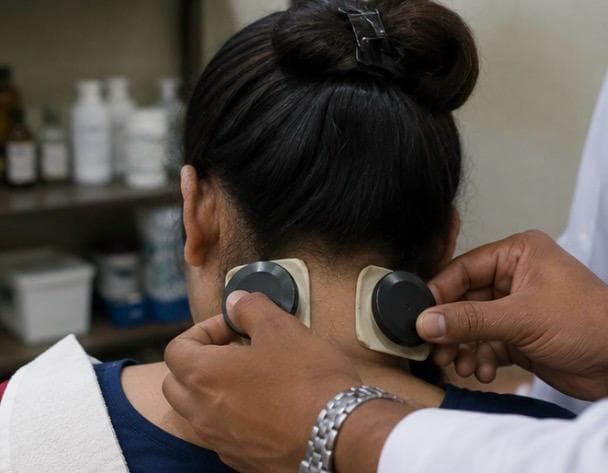
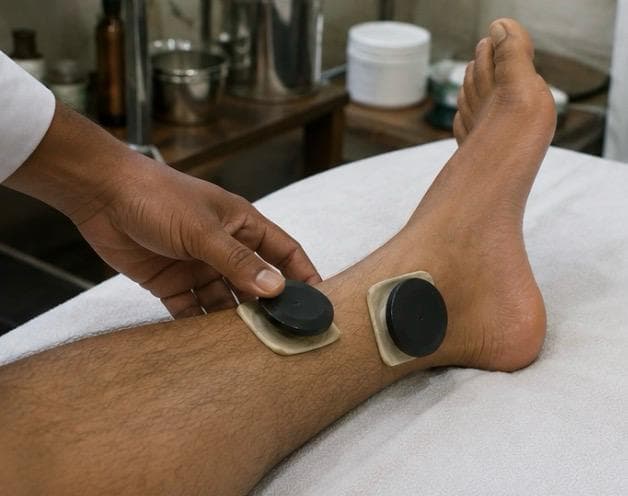
Magnet Therapy

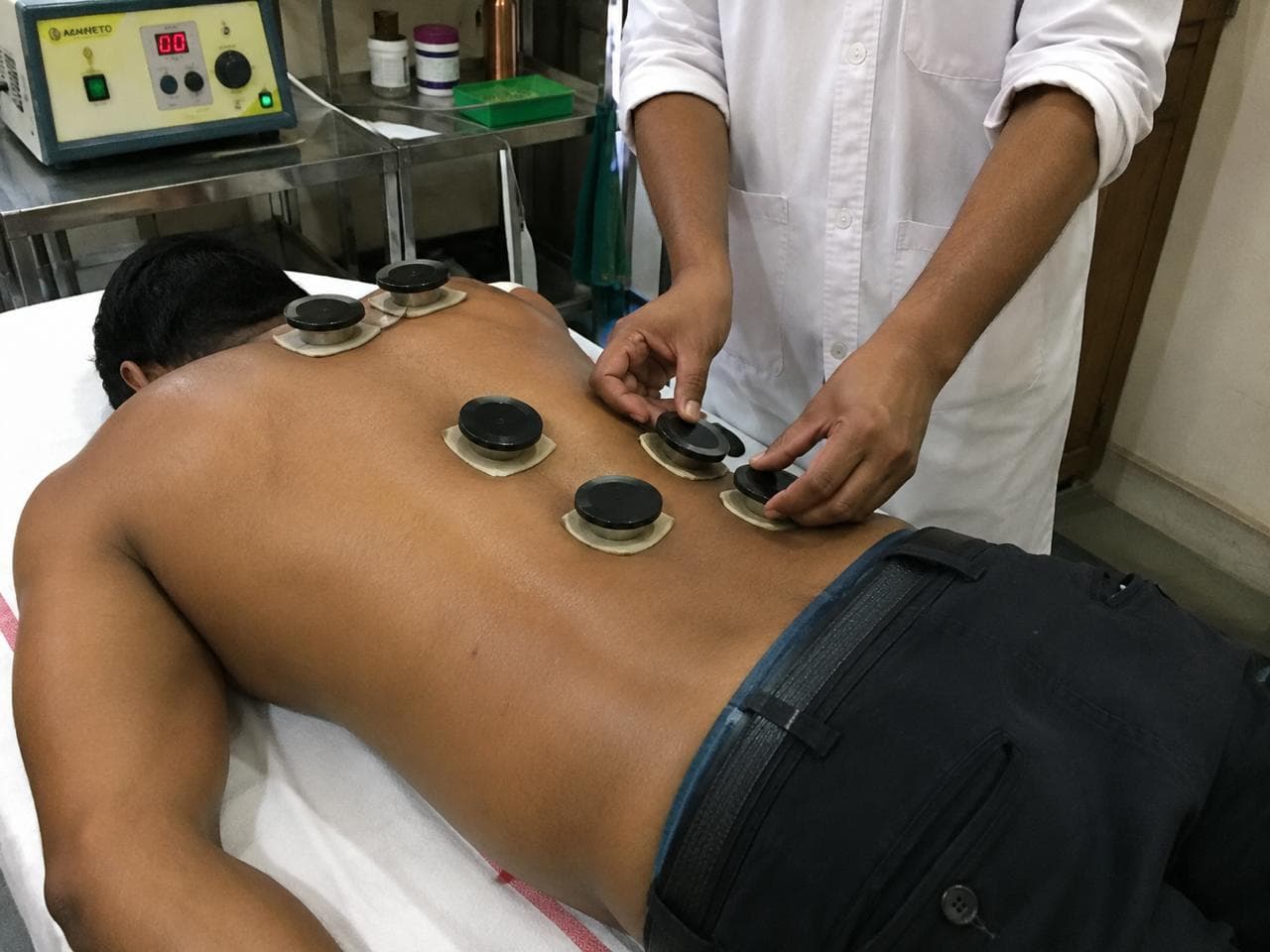
Low-intensity magnets are placed on or near the body to help ease pain and swelling.

  • Therapeutic magnets of measured strength prepared for a session.

    Therapeutic magnets in use

  • Magnet applied over a painful joint.

    Joint application

  • Magnetic belt being fitted for longer wear.

    Magnetic belt fitting

What happens
  • Magnets of measured strength are placed directly over a specific painful joint or specifc point.
  • Applied for a set time during each session, or worn for longer as bands and belts.
  • Strength and placement are decided by the physician and are never generic.
How it helps the body
  • A magnetic field gently widens local blood vessels, improving blood flow to the area.
  • Better local circulation helps reduce swelling and helps waste products clear faster.
  • It calms overactive nerve endings, which is why pain often eases within a few sessions.
Duration
15–20 minutes
Course
7–14 days
Feel
A gentle feeling of warmth
After
No restrictions
Commonly used for
  • Joint pain and stiffness
  • Swelling
  • Sports injuries
  • Nerve-related tingling
  • Slow-healing injuries
  • Chronic low back pain
Diet therapy

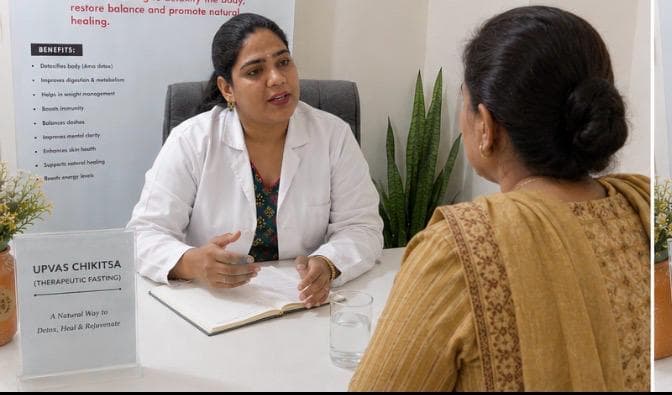
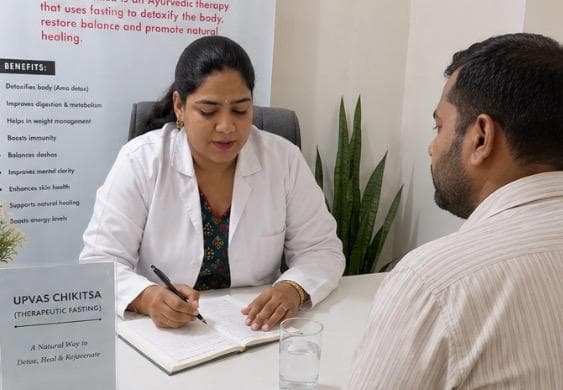
Upvas Chikitsa

Fasting Therapy

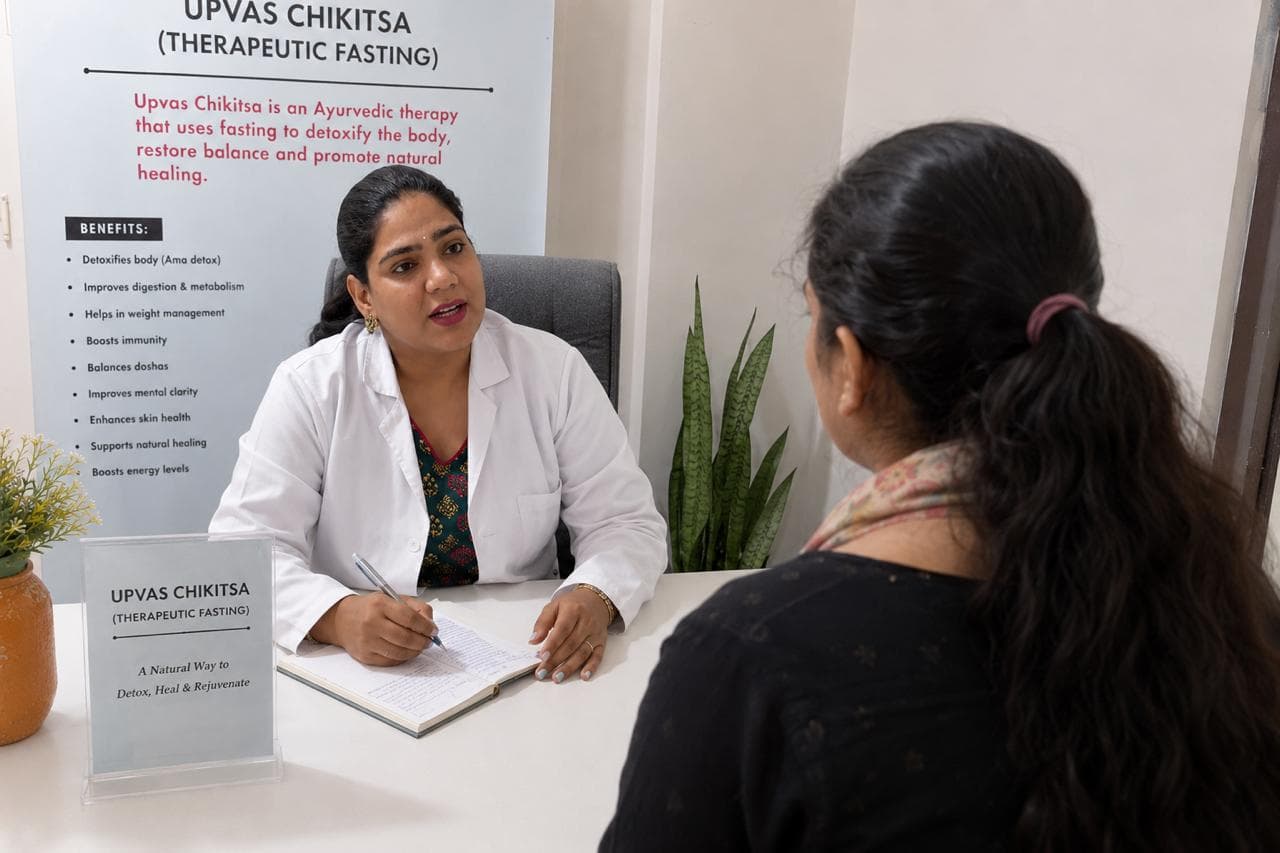
A structured, supervised rest for the digestive system — never an unsupervised diet.

  • Physician reviewing a patient's vitals during a supervised fast.

    Physician monitoring session

  • Fresh juices prepared for a supervised juice fast.

    Juice fast preparation

  • Graded diet chart written for breaking a fast.

    Graded diet chart

What happens
  • A planned period of reduced or liquid-only intake, set and monitored by a physician.
  • May be a juice fast, fruit fast, or full water fast, depending on your health.
  • Vitals are checked daily for the duration and the fast is broken gradually.
How it helps the body
  • Resting the digestive system frees up energy that the body normally spends breaking down food.
  • That freed energy goes into repair — clearing inflammation and old cellular waste.
  • It helps reset appetite and taste, which is why food often feels different afterwards.
  • It is never left unsupervised, because breaking a fast incorrectly can do more harm than the fast helps.
Duration
1–7 days
Monitoring
Daily physician review
Feel
Light, clear-headed
After
Gradual reintroduction of the diet
Commonly used for
  • Obesity
  • Sluggish digestion
  • Skin conditions
  • Mild fatty liver
  • High cholesterol
  • Seasonal detox
Diet therapy

Ahar Chikitsa

Therapeutic Diet Planning

Food is used as medicine — a specific plan built around your condition, not a generic diet chart.

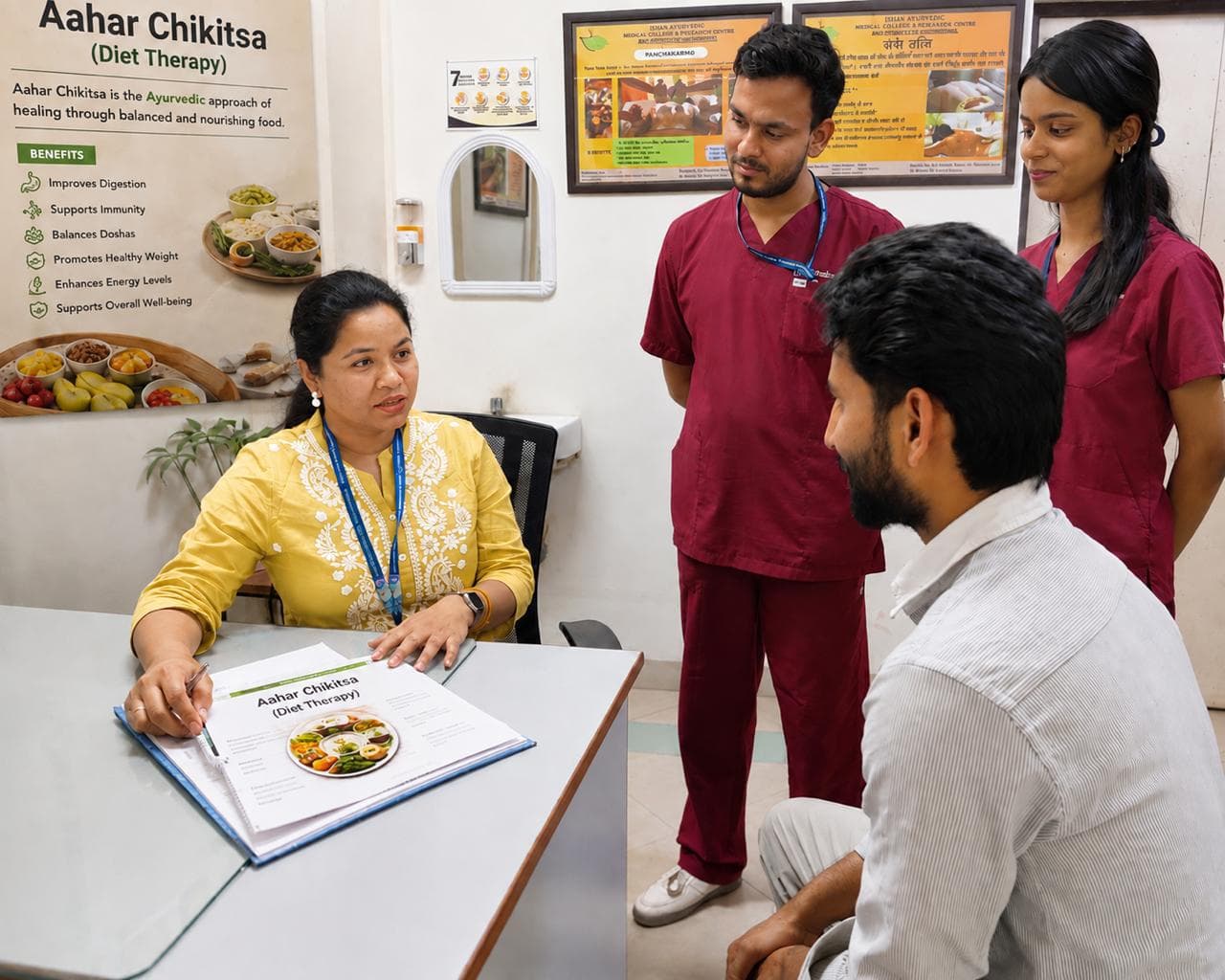
  • Dietician consulting with a patient about a therapeutic plan.

    Dietician consultation

  • Personalised daily diet chart written for a patient.

    Personalised diet chart

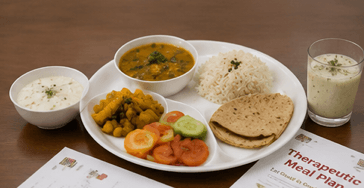
  • Sample therapeutic meal prepared in the hospital kitchen.

    Sample therapeutic meal

What happens
  • A dietician reviews your condition, digestion and daily routine before writing a plan.
  • The plan specifies what to eat, in what combination, and at what time of the day.
  • Reviewed and adjusted throughout your course as your condition changes.
How it helps the body
  • The right food combination reduces the digestive effort needed to absorb nutrients.
  • Removing foods that aggravate your specific condition helps inflammation settle.
  • Correct meal timing work with your body's natural digestive rhythm instead of against it.
Duration
Ongoing plan
Review
Every 1–2 weeks
Format
Printed daily chart
Support
Follow-up consultation
Commonly used for
  • Diabetes
  • High blood pressure
  • Obesity
  • Digestive disorders
  • Skin conditions
  • Post-illness recovery
Natural elements

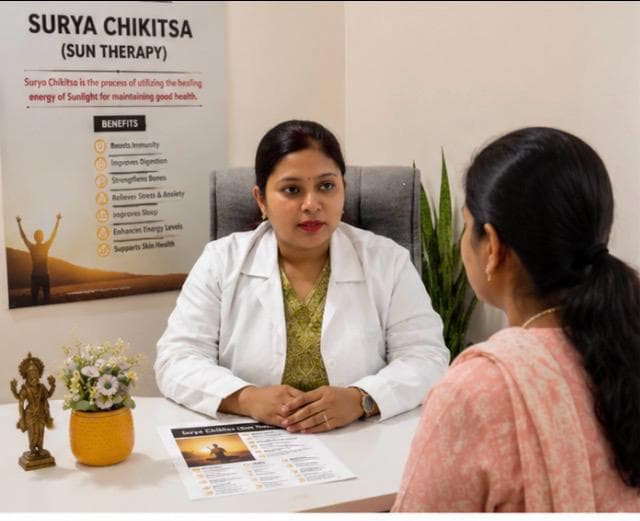
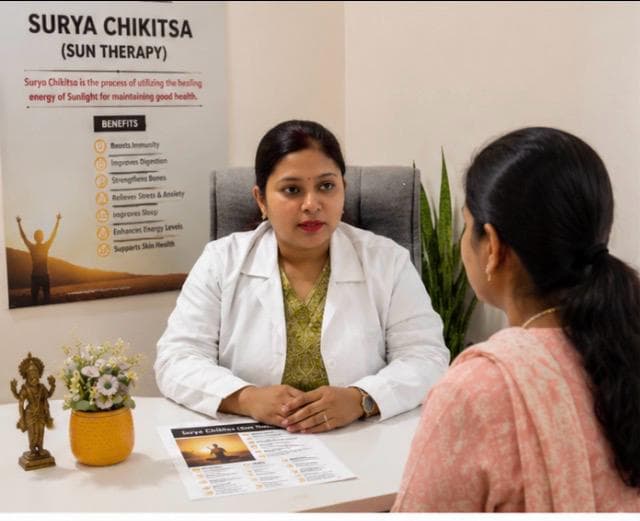
Surya Chikitsa

Sun Therapy

Timed, measured sunlight exposure to strengthen bone, skin health and mood.

  • Morning sun exposure session in the outdoor therapy area.

    Morning sun exposure session

  • Sensitive areas shielded before a sun therapy session.

    Shielded skin preparation

  • Outdoor therapy area used for sun therapy.

    Outdoor therapy area

What happens
  • Controlled sun exposure at the safest hours of the day, with the duration set individually.
  • May be combined with a light oil massage beforehand for deeper effect.
  • Sensitive areas are protected and the timing avoids the harshest midday sun.
How it helps the body
  • Sunlight on the skin triggers the body's own vitamin D production, needed for strong bones.
  • Morning light helps reset the body's internal clock, improving night sleep.
  • It helps lift mood through the same pathways that make a sunny day feel better than a grey one.
Duration
15–30 minutes
Best time
Early morning
Feel
Warm, gently energising
After
Hydrate well
Commonly used for
  • Vitamin D deficiency
  • Weak bones
  • Low mood
  • Skin conditions
  • Poor sleep rhythm
  • General low energy
Colour therapy

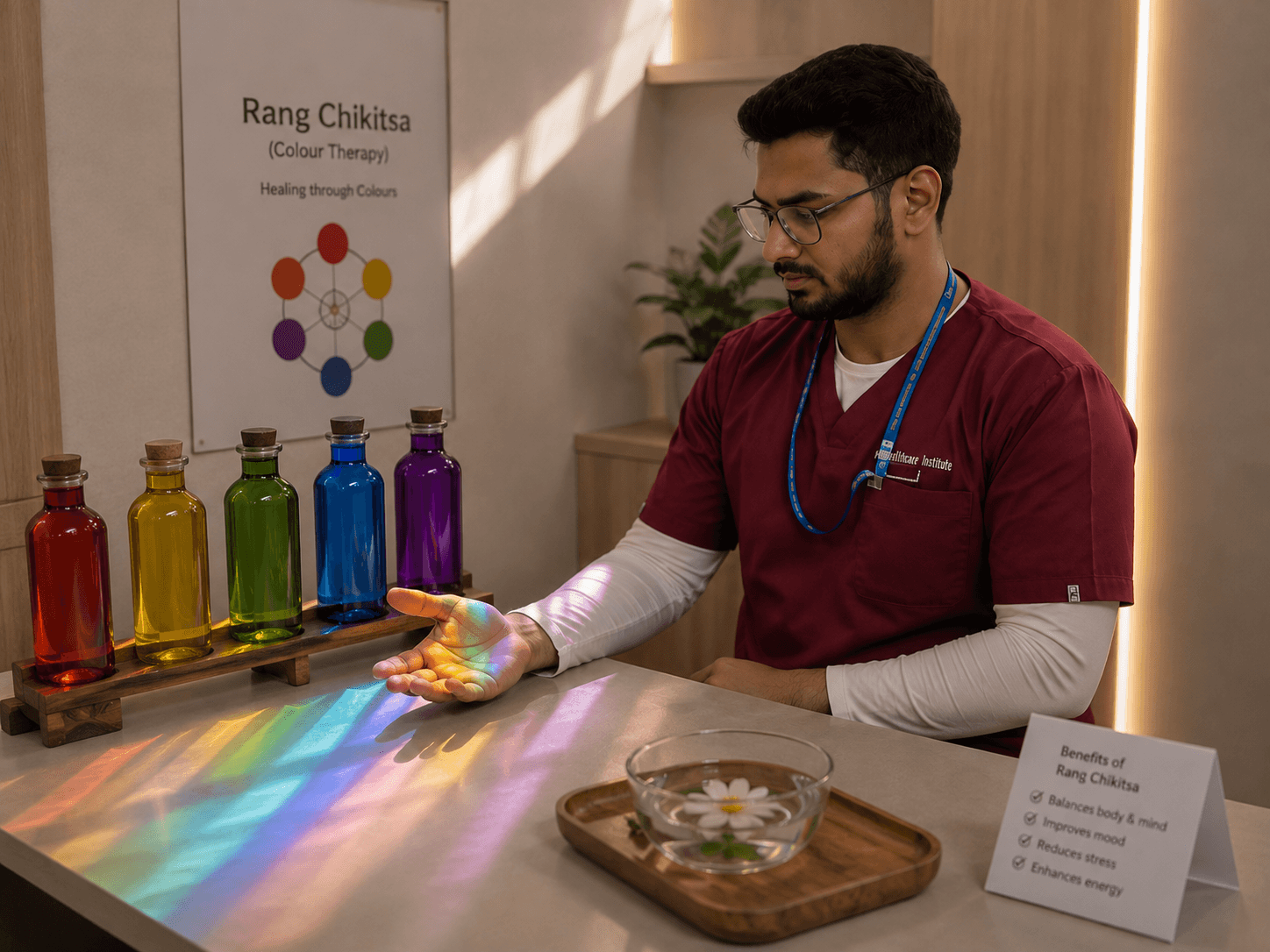
Rang Chikitsa

Chromotherapy

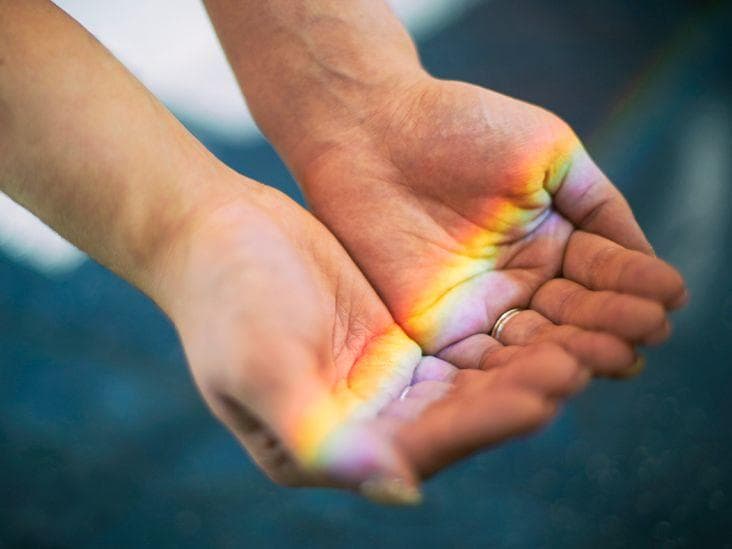
Coloured light is directed at the body to influence mood and energy.

  • Coloured light therapy room prepared for a session.

    Coloured light therapy room

  • Colour-infused water bottles set out in sunlight.

    Colour-infused water setup

  • Quiet rest area used after chromotherapy.

    Quiet rest area

What happens
  • Coloured light or colour-infused water is used, with the colour chosen for your condition.
  • Sessions are short and combined with rest in a quiet room.
  • Often used alongside other naturopathic therapies, not as a standalone treatment.
How it helps the body
  • Different wavelengths of light are known to change alertness, mood and even blood pressure slightly.
  • Warm colours are used to energise a sluggish system; cool colours to calm an overactive one.
  • The effects are gentle and work best as one part of a wider treatment plan.
Duration
15–20 minutes
Course
As advised
Feel
Calm or gently uplifted
After
Rest in dim light
Commonly used for
  • Low energy
  • Anxiety and restlessness
  • Mild mood disturbance
  • Sluggish digestion
  • Sleep difficulty
  • General stress
Yoga

Five pillars of practice

We don't teach yoga as a set of poses to collect. It rests on five pillars — body, breath, cleansing, mind and rest — and a good practice draws from all five, matched to what your body needs today.

The body

Asana

Posture Practice

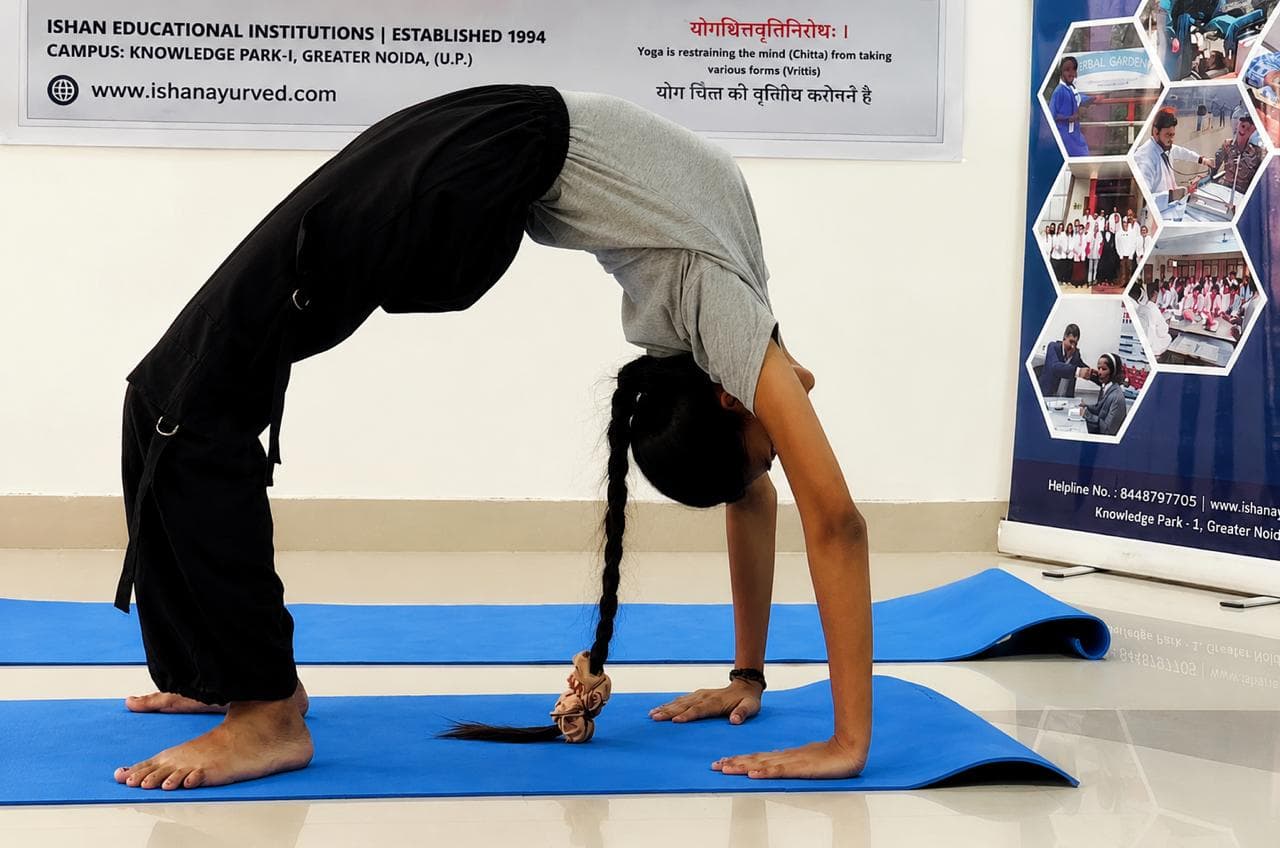
Steady, comfortable postures that build strength, flexibility, and body awareness — never forced.

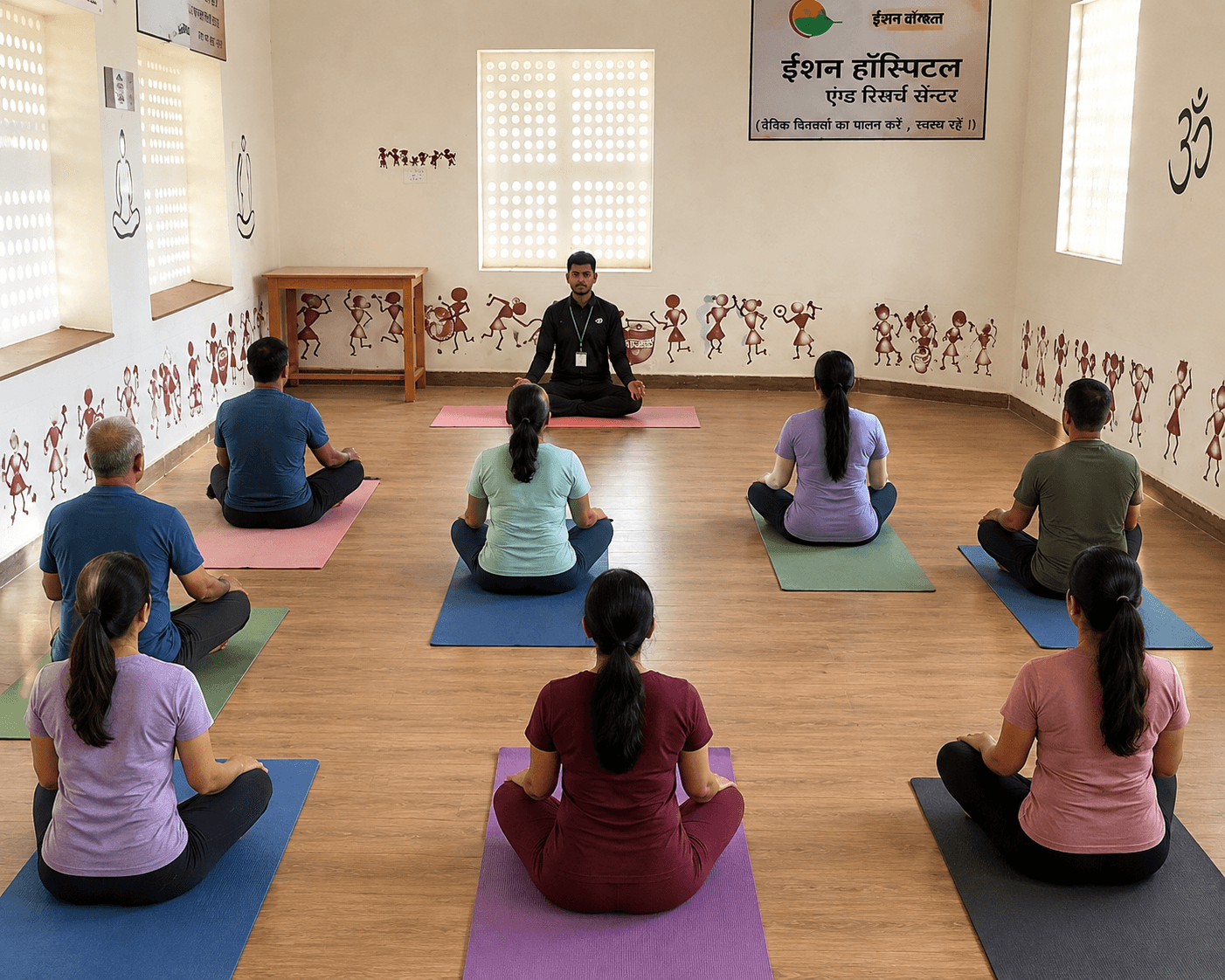
  • Guided Yoga Asana session at Ishan Ayurvedic Hospital.

    Guided asana session

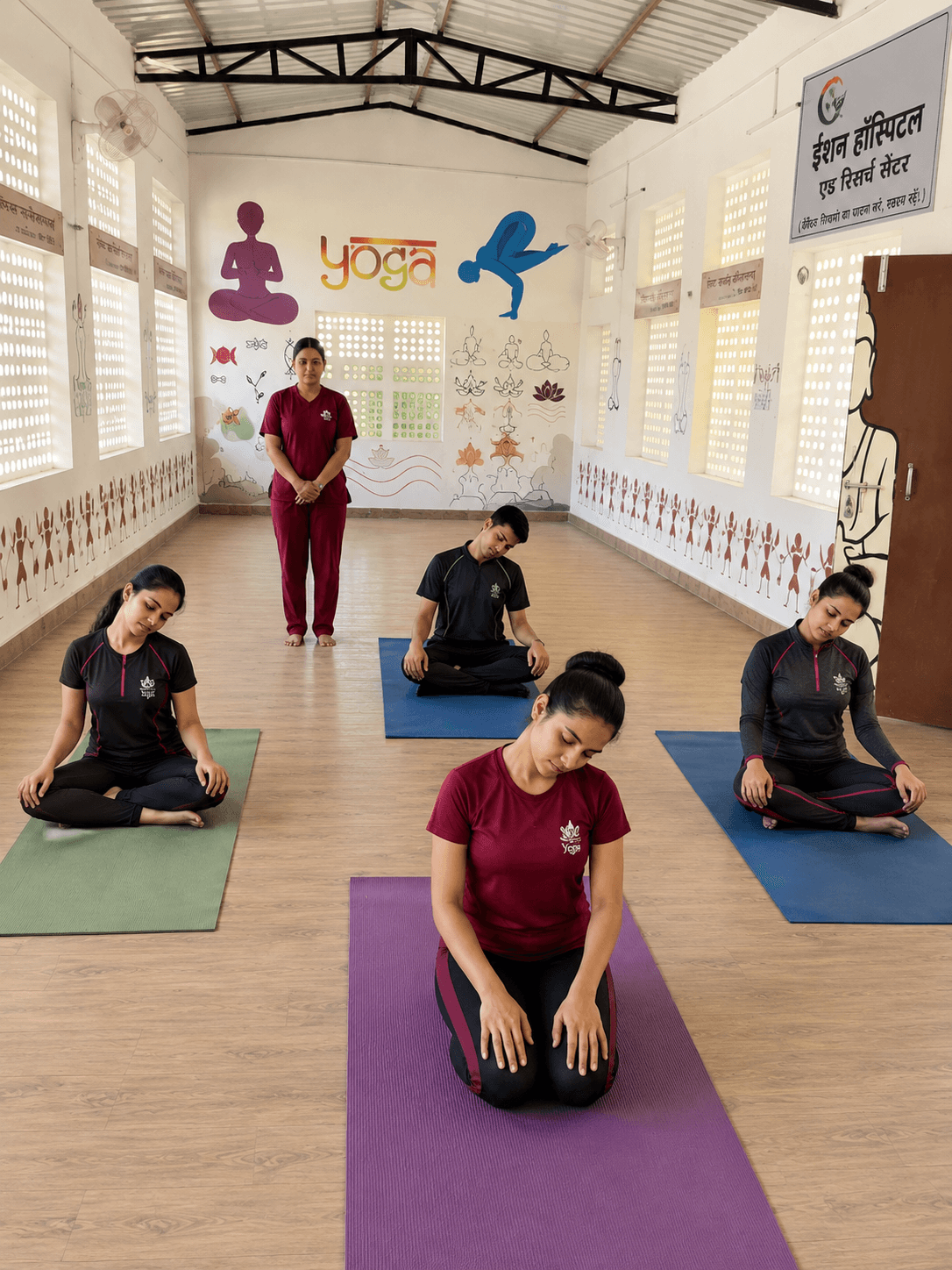
  • Group asana session in the yoga hall.

    Group asana session

What a session looks like
  • Guided group or individual sessions, with postures chosen for your body and condition.
  • Each posture is held with attention to breath, not rushed or forced into.
  • A typical session moves from a gentle warm-up, through standing and seated postures to final relaxation.
How it helps
  • Holding a posture steadily builds real strength in muscles that daily life rarely uses.
  • Stretching under control lengthens tissues safely, improving flexibility without injury.
  • Postures that gently compress and release the abdomen aid digestion and organ function.
  • Balance postures improve coordination between the mind and the body's smaller muscles.
Session
45–60 minutes
Format
Group or one-to-one
Feel
Warmed, steady, aware
Suitable for
All ages, with modification
Commonly helpful for
  • Back and joint pain
  • Poor posture
  • Stiffness
  • Poor balance in older age
  • Low core strength
  • General fitness
The breath

Pranayama

Breath Regulation

Controlled breathing patterns that calm the nervous system and improve lung capacity.

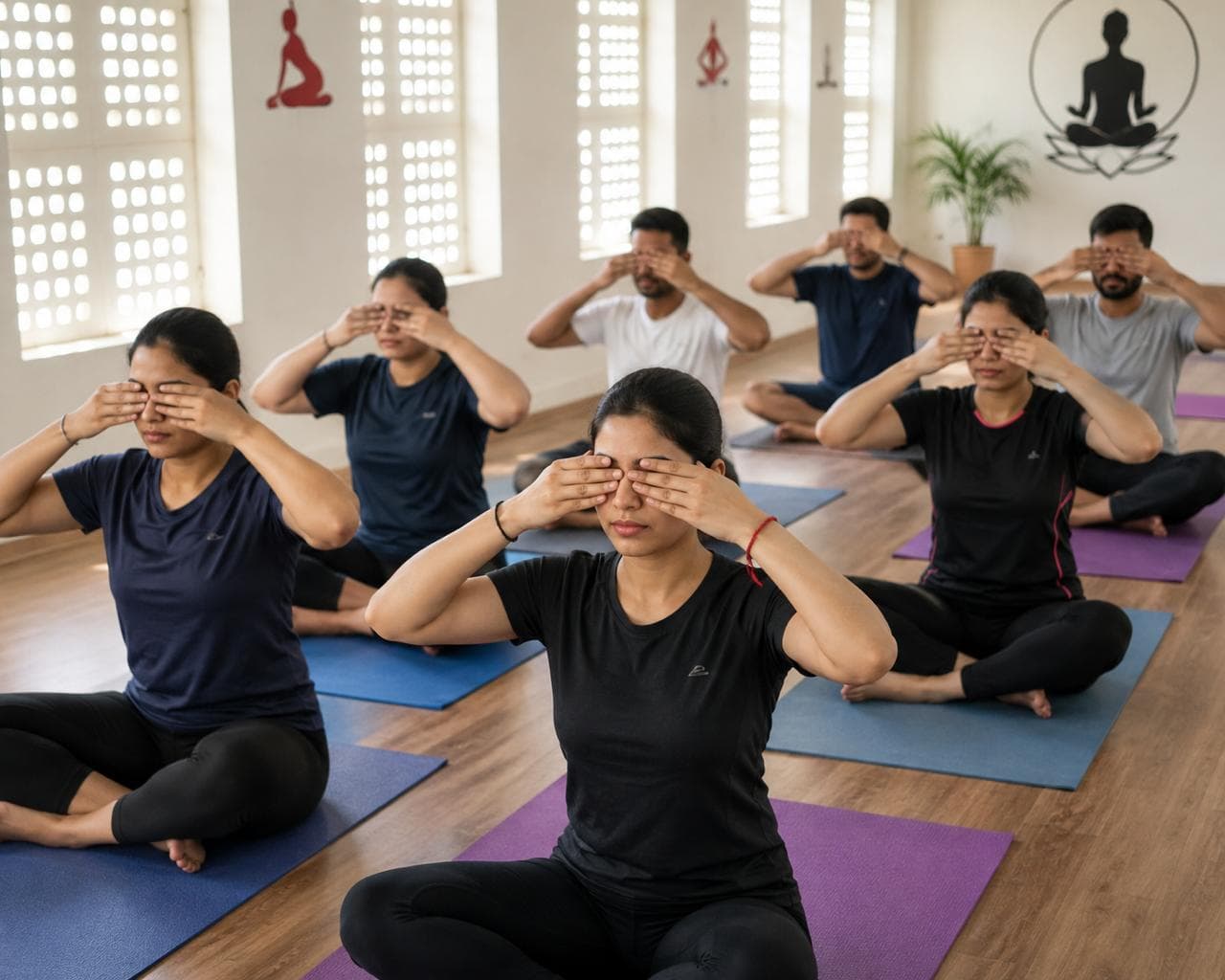
  • Guided Pranayama breathing therapy session.

    Pranayama breath regulation

  • Seated breathing practice during a pranayama session.

    Seated breathing practice

What a session looks like
  • Seated breathing practices, each with a specific rhythm — slow, alternate-nostril, or forceful.
  • Taught progressively, starting with simple slow breathing before advancing further.
  • Practised on an empty stomach, usually first thing in the morning.
How it helps
  • Slow, deep breathing shifts the nervous system out of stress mode within minutes.
  • It increases the amount of oxygen reaching the blood with each breath.
  • Alternate-nostril breathing has been shown to help steady the heart rate and lower blood pressure.
  • Regular practice strengthens the diaphragm and gradually expands usable lung capacity.
Session
20–30 minutes
Best time
Early morning, empty stomach
Feel
Calm, clear, steady
Suitable for
Most ages, with guidance
Commonly helpful for
  • Anxiety and stress
  • High blood pressure
  • Asthma and breathlessness
  • Poor concentration
  • Fatigue
  • Insomnia
Cleansing

Shatkarma

Cleansing Techniques

Simple internal cleansing practices — the most familiar is Neti, a saline nasal rinse.

  • Yogic Shatkarma practice session.

    Shatkarma cleansing practice

  • Neti pot demonstration given by a yoga instructor.

    Neti pot demonstration

What a session looks like
  • A set of traditional cleansing techniques, taught individually and only when appropriate.
  • Neti — a warm saline rinse through the nose — is the most commonly used and simplest to learn.
  • Always taught by a qualified instructor first, then practised independently at home.
How it helps
  • A saline rinse clears mucus and allergens from the nasal passage mechanically.
  • Clear nasal passages mean better breathing during both pranayama and daily life.
  • Regular practice may help reduce the frequency of sinus infections and seasonal congestion.
Session
10 minutes
Frequency
Daily, once learned
Feel
Clear, open breathing
Suitable for
Adults, with instruction
Commonly helpful for
  • Chronic sinusitis
  • Nasal allergies
  • Frequent colds
  • Snoring
  • Sinus headache
  • Preparation for pranayama
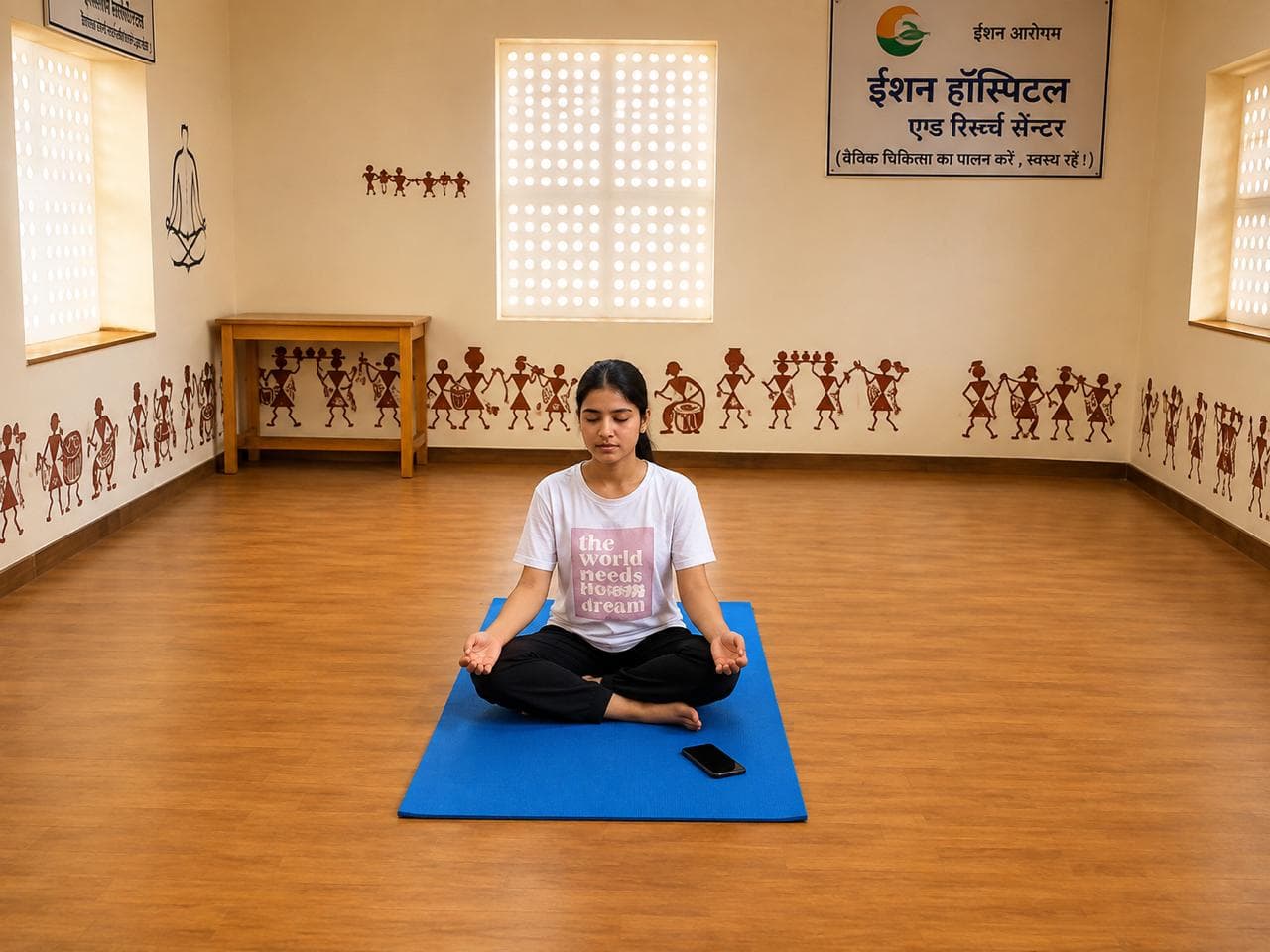
The mind

Dhyana

Meditation

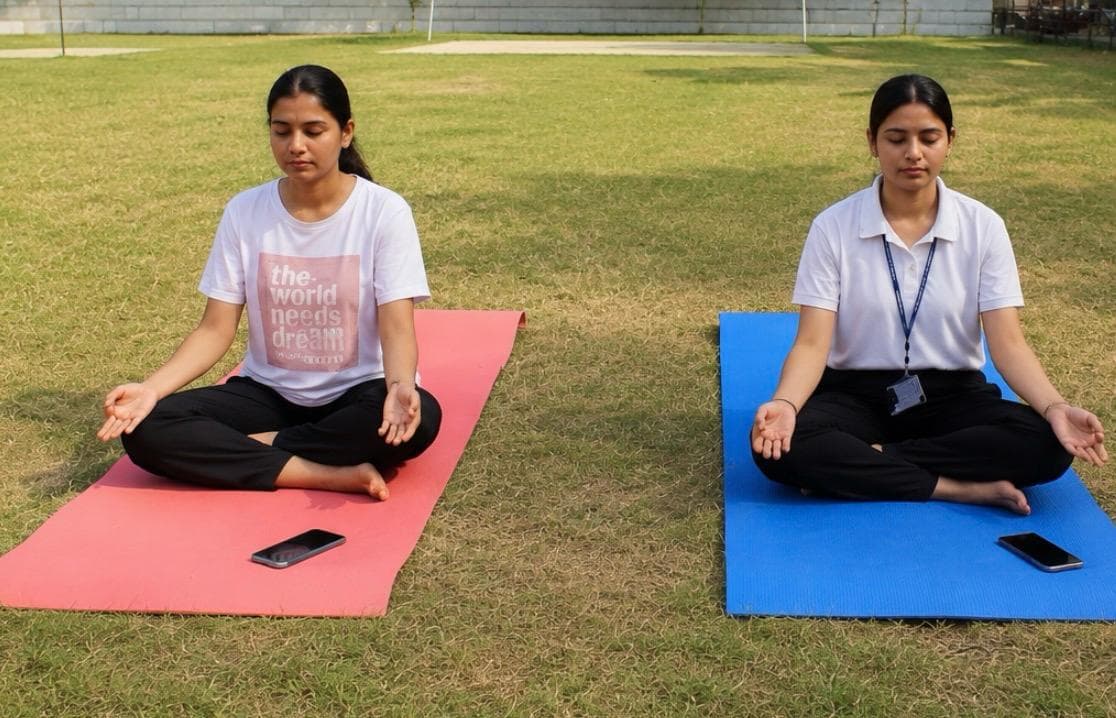
Seated stillness practice that trains attention and quiets a restless mind.

  • Guided Dhyana (meditation) practice session.

    Guided Dhyana session

  • Guided meditation session in the quiet hall.

    Guided meditation session

What a session looks like
  • Seated practice, guided at first, using the breath or a simple point of focus as an anchor.
  • Sessions grow longer gradually — starting at 10 minutes, building over weeks.
  • Practised in a quiet, dedicated space, individually or in a group.
How it helps
  • Repeated practice at holding attention trains the mind the way exercise trains a muscle.
  • It quiets the stress-response part of the brain, which lowers cortisol over time.
  • Regular meditators show measurably better focus and slower reactivity to stress.
  • It works alongside pranayama — a settled breath makes a settled mind easier to achieve.
Session
10–30 minutes
Best time
Morning or before sleep
Feel
Settled, quiet, present
Suitable for
All ages
Commonly helpful for
  • Chronic stress
  • Anxiety and racing thoughts
  • Poor sleep
  • Low focus and concentration
  • Irritability
  • Emotional exhaustion
Deep rest

Yoga Nidra

Guided Deep Relaxation

A guided lying-down practice that gives the body rest deeper than ordinary sleep.

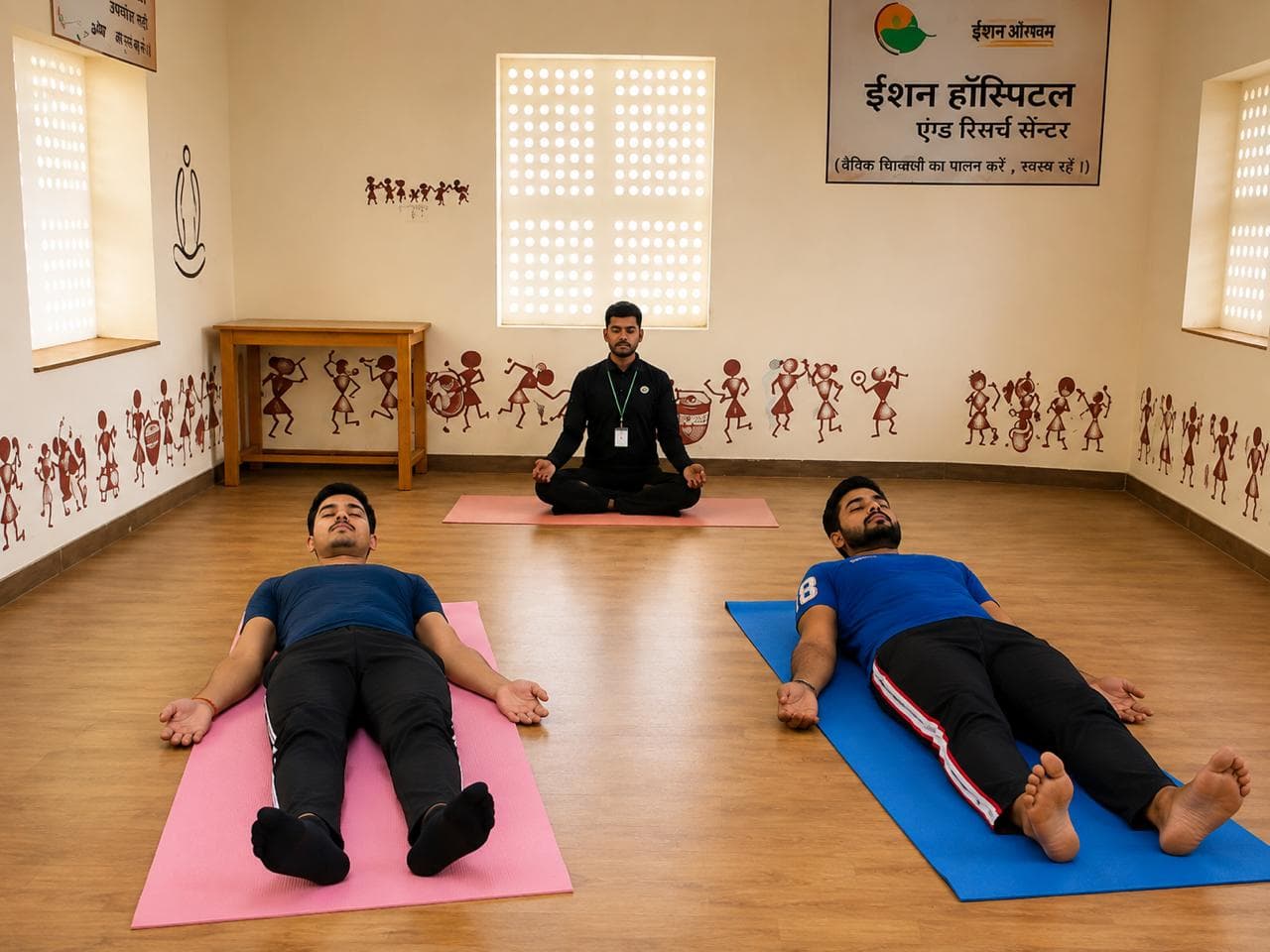
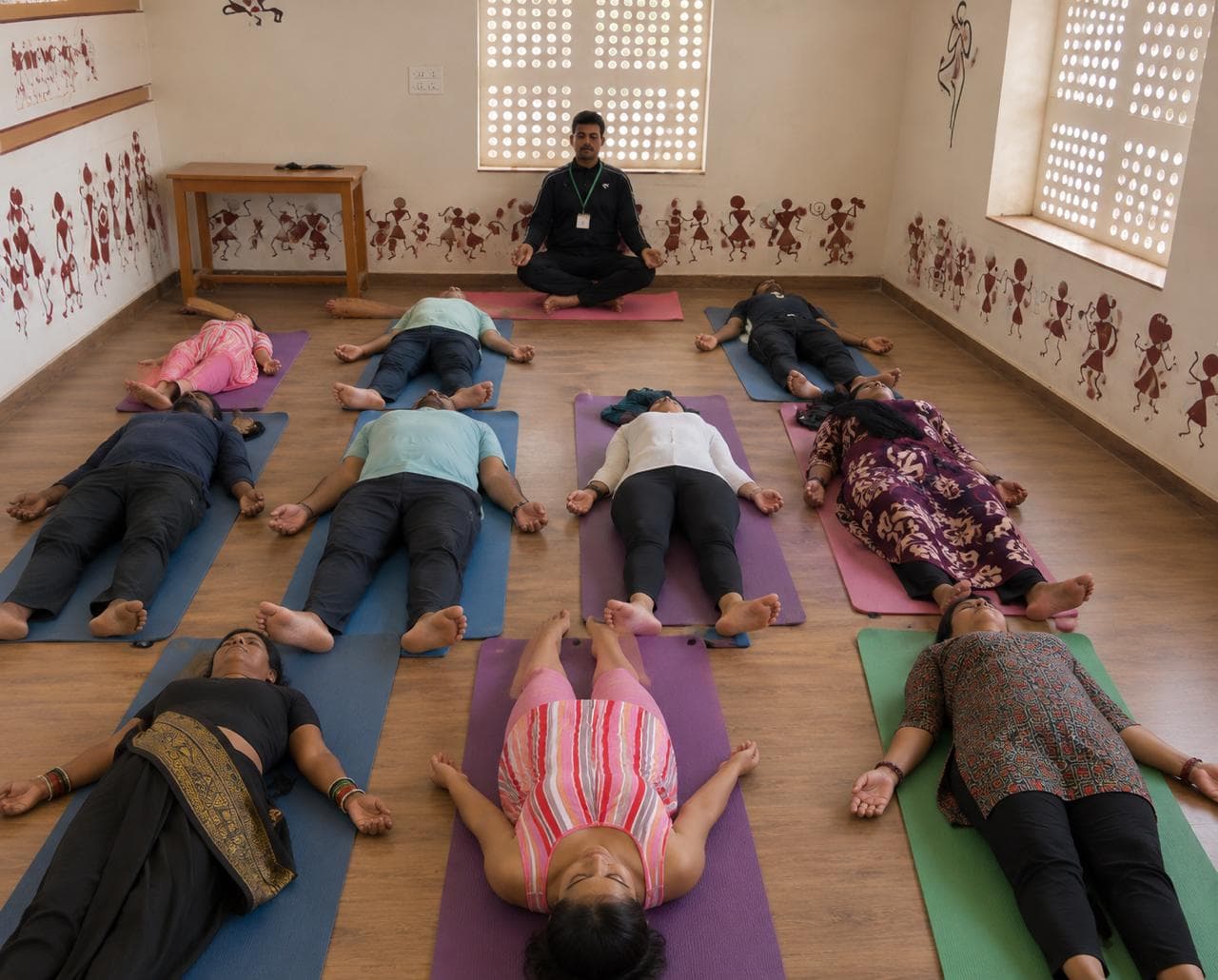
  • Guided Yoga Nidra deep relaxation therapy.

    Guided Yoga Nidra relaxation

  • Guided lying-down Yoga Nidra practice.

    Guided lying-down practice

What a session looks like
  • You lie down comfortably while a guide leads you through a slow body and breath awareness sequence.
  • You remain aware throughout — this is not sleep, though it feels similarly restful.
  • A full session runs 30–45 minutes, usually done once daily during a course.
How it helps
  • The body enters a deeply relaxed state while the mind stays gently alert.
  • It helps reduce muscular tension held unconsciously throughout the day.
  • Regular practice has been shown to lower stress hormones and improve sleep quality.
  • Many people find 30 minutes of Yoga Nidra as restorative as a much longer nap.
Session
30–45 minutes
Best time
Afternoon or evening
Feel
Deeply rested, clear
Suitable for
All ages
Commonly helpful for
  • Chronic fatigue
  • Insomnia
  • High stress
  • Recovery after illness
  • Anxiety
  • Burnout
Why it works

What a regular practice changes

Naturopathy clears what is working against the body. Yoga builds what keeps it well. Practised together and kept up, the change shows across every system.

  • Physical

    Stronger joints, better posture, improved flexibility, and steadier balance.

  • Respiratory

    Fuller lung capacity and easier, more efficient breathing.

  • Circulatory

    Steadier blood pressure and better oxygen delivery throughout the body.

  • Mental

    Sharper focus, calmer stress response, and better sleep quality.

  • Metabolic

    Better digestion and support for healthy blood sugar levels and weight management.

  • Emotional

    Greater resilience to daily stress and a steadier mood throughout the day.

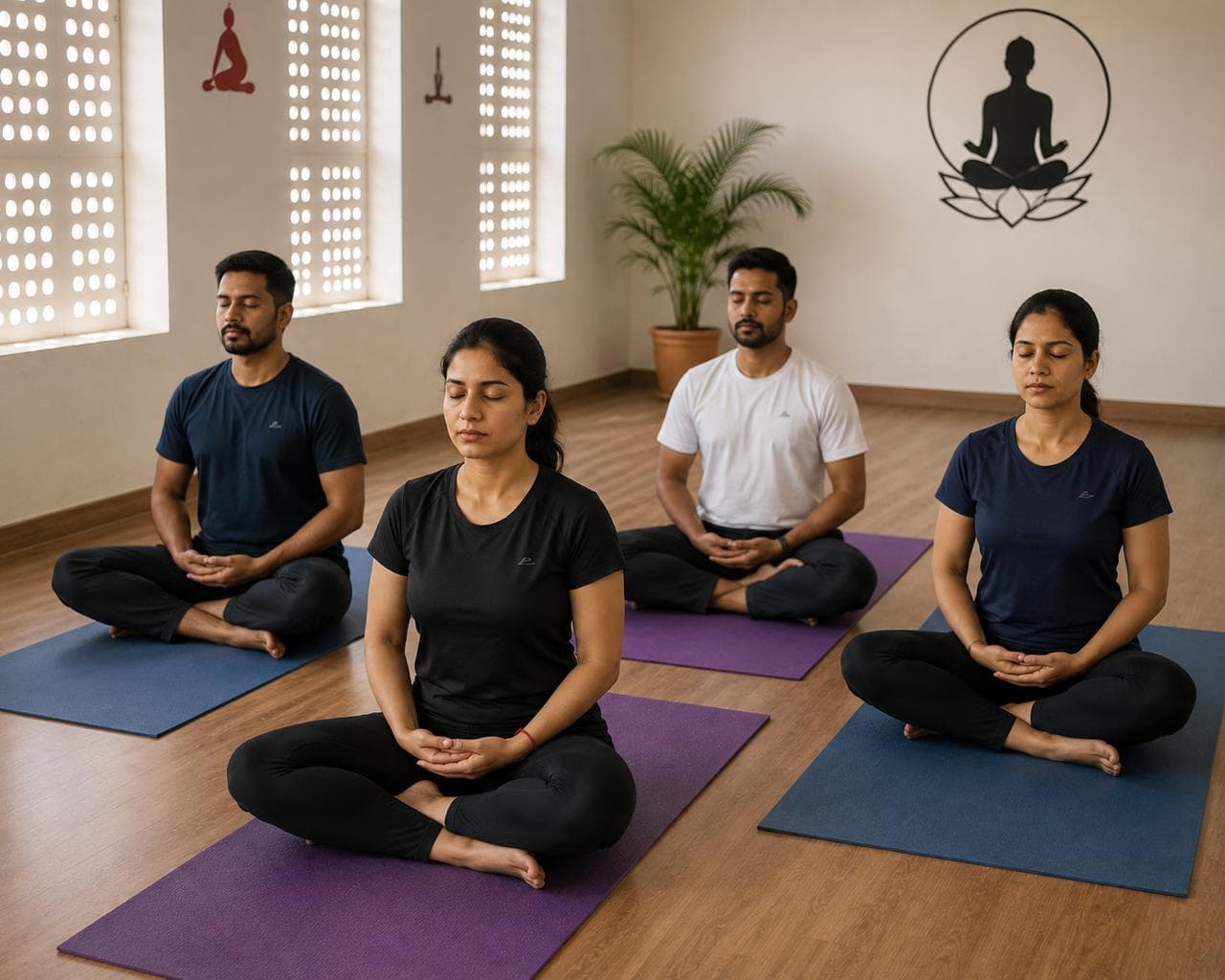
Yoga and naturopathy practice at Ishan Ayurvedic Hospital, Greater Noida.
Suitability

Who it suits — and who should check first

Naturopathy and yoga are gentle, but gentle is not the same as unconditional. A short screening tells us what fits.

Usually a good fit

  • Lifestyle conditions — obesity, high blood pressure, diabetes
  • Chronic stress, anxiety and poor sleep
  • Digestive issues and acidity
  • Joint stiffness and general low fitness
  • Recovery support after illness
  • Anyone wanting a preventive, drug-free routine

Tell us first — we will adapt the plan

  • Pregnancy
  • Uncontrolled diabetes or blood pressure
  • Recent surgery or acute injury
  • Heart, kidney or liver disease under treatment
  • Severe weakness or very low body weight (fasting therapy)
  • Children and adults over 75 (asana modified accordingly)

Start with an assessment, not a therapy

A short consultation tells us your condition and what your body can take. The plan — therapies, diet and yoga routine — is written after that.